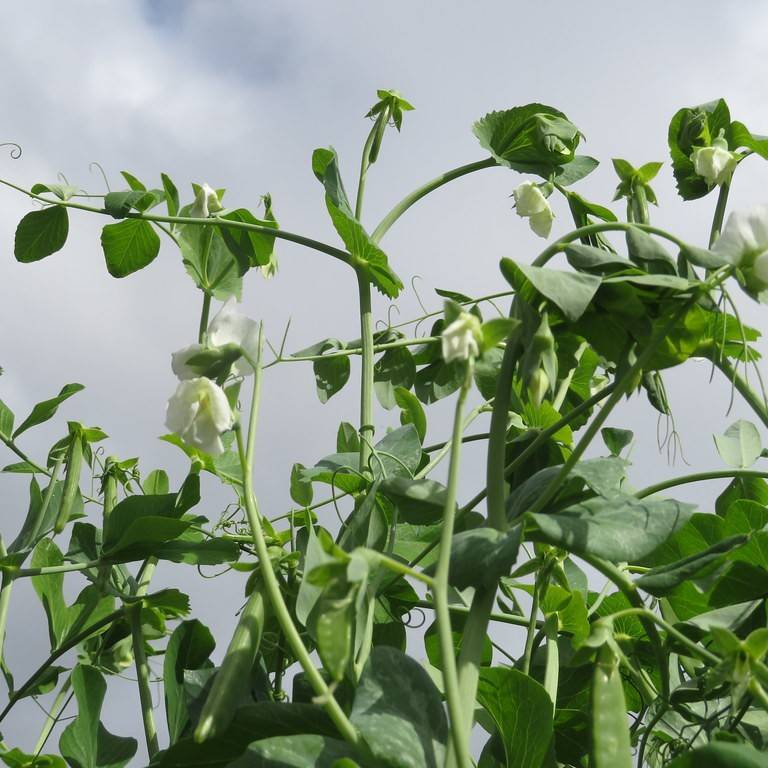
Garden Pea
Pisum sativum
Overview
Garden pea is a cool-season annual legume grown globally for its nutrient-dense seeds and edible pods. It has vining or bush growth habits, with compound leaves and distinctive white or pale purple self-pollinating flowers that develop into elongated green pods. The plant forms symbiotic relationships with soil bacteria to fix atmospheric nitrogen, improving soil fertility for subsequent crops.
Care Guide
Watering
Keep soil consistently moist but not waterlogged, providing 1 inch of water per week during growth, flowering, and pod development. Avoid overhead watering to reduce fungal disease risk, watering at the base of plants instead. Reduce watering once pods near maturity to prevent splitting.
Light
Grow in full sun, receiving a minimum of 6 hours of direct sunlight daily for optimal growth and pod production. Partial shade is tolerated in very warm climates, but will result in reduced yields and slower growth. Avoid planting in heavily shaded areas, as this encourages weak, leggy growth and increases pest susceptibility.
Soil
Plant in well-draining, loamy soil with a pH between 6.0 and 7.0 for best results. Peas prefer soil rich in organic matter, but do not need high nitrogen levels, as they fix their own nitrogen from the air. Heavy clay soils should be amended with compost to improve drainage and prevent root rot.
Fertilizer
Apply a balanced, low-nitrogen fertilizer at planting time to support root and foliage growth without promoting excessive leaf production over pods. No additional fertilization is typically needed during the growing season, as the plant’s nitrogen-fixing nodules provide sufficient nutrients for growth. Over-fertilizing with nitrogen will lead to lush foliage and reduced pod yields.
Temperature
Garden peas thrive in cool temperatures between 55-70°F (13-21°C), and can tolerate light frost down to 28°F (-2°C) when young. Temperatures above 80°F (27°C) cause plants to stop producing pods, reduce seed sweetness, and trigger early senescence. For successive harvests, sow seeds 2-3 weeks before the last expected spring frost, and plant a second crop in late summer for fall harvest in mild climates.
Pruning
Bush pea varieties require minimal pruning, only removing any yellowed or diseased lower foliage to improve air circulation around the base of plants. Vining varieties can have the top 1 inch of growth pinched back once they reach the top of their support structure to encourage side branching and more pod production. Remove all plant debris after harvest to prevent overwintering pests and diseases.
Propagation
Garden peas are almost exclusively propagated from direct-sown seed, as they do not transplant well due to their delicate root systems. Soak seeds in water for 12-24 hours before sowing to speed germination, planting 1-2 inches deep and 2-4 inches apart in rows spaced 18-24 inches apart. For vining varieties, install trellises or supports at planting time to give climbing tendrils a structure to grip.
Humidity
Garden peas prefer moderate humidity between 40-60% for healthy growth and disease prevention. High humidity above 70%, combined with warm temperatures, increases the risk of powdery mildew and other fungal foliar diseases. Ensure adequate spacing between plants to promote air circulation and reduce humidity around foliage in damp conditions.
Repotting
Garden peas are almost never grown in containers long enough to require repotting, as they are harvested and discarded at the end of their single growing season. If growing in containers, choose a pot at least 12 inches deep with drainage holes, and sow seeds directly in the final container to avoid root disturbance from transplanting. Discard plants after harvest, and refresh soil for subsequent plantings to prevent nutrient depletion and disease buildup.
Uses & Symbolism
Garden peas are primarily grown for human consumption, eaten fresh, frozen, canned, or dried as a nutrient-dense source of protein, fiber, vitamin C, and iron. Edible-pod cultivars such as snow peas and sugar snap peas are eaten whole, often raw in salads or stir-fried. Pea plants are also used as a cover crop to improve soil fertility, prevent erosion, and suppress weed growth in fallow garden beds.
Diseases & Pests
Common fungal diseases affecting garden peas include powdery mildew, downy mildew, and fusarium wilt, which thrive in damp, humid conditions with poor air circulation. Common pests include pea aphids, pea weevils, and cutworms, which feed on foliage, flowers, and developing seeds. Root rot can occur in waterlogged soils, so proper drainage is critical to prevent plant death.
Related plants
Other plants you might like if you grow Garden Pea.