Cooper's African Hyacinth
Ledebouria cooperi
Overview
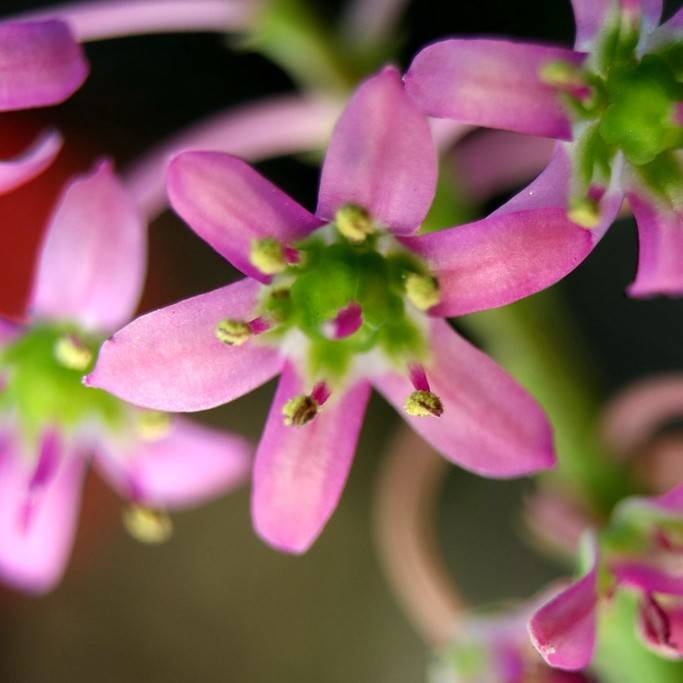
Cooper's African Hyacinth is a small, clumping bulbous plant recognized for its broad, lance-shaped leaves marked with dark green or purple splotches over a lighter green base. In spring to early summer, it produces upright, slender spikes lined with small, bell-shaped pale pink or lilac flowers that have a subtle, sweet fragrance. Native to grassland and rocky slopes of southern Africa, it is adapted to seasonal dry periods, making it highly tolerant of occasional neglect.
Care Guide
Watering
Water thoroughly when the top 1 to 2 inches of soil feel dry to the touch, reducing frequency significantly during the winter dormant period when growth slows. Avoid overwatering, as soggy soil can cause the bulb to rot; empty any excess water from the plant's saucer after watering to prevent standing moisture around roots.
Light
Thrives in bright, indirect light, but can tolerate partial shade, though lower light may reduce flowering and make leaf markings less vibrant. Protect it from intense, direct midday sun, which can scorch the delicate foliage, but a few hours of gentle morning sun will support healthy growth and blooming.
Soil
Requires a well-draining, porous soil mix; a combination of standard potting soil amended with perlite, pumice, or coarse sand at a 1:1 ratio works well to prevent water retention around the bulb. The ideal pH is slightly acidic to neutral, between 6.0 and 7.0, to support nutrient uptake.
Fertilizer
Feed once a month during the active growing season (spring to early fall) with a diluted balanced liquid fertilizer, formulated for houseplants or flowering bulbs, at half the recommended strength. Do not fertilize during the winter dormant period, as the plant is not actively growing and excess nutrients can damage the root system.
Temperature
Prefers average room temperatures between 65 and 75°F (18 and 24°C) during active growth, and can tolerate brief drops as low as 50°F (10°C) during dormancy. It is not frost-hardy, so outdoor specimens must be brought indoors before temperatures fall below freezing to avoid bulb death.
Pruning
Trim off yellowed, damaged, or dead leaves at their base using clean, sharp scissors to maintain the plant's tidy appearance and prevent fungal growth. After flowering, snip off spent flower stalks at the base to redirect energy back to the bulb for the next growing season.
Propagation
Most easily propagated by dividing offsets (small bulblets) that form around the base of the mature mother bulb during repotting in late winter or early spring. Separate the offsets gently, plant them in their own small pots with well-draining soil, and water sparingly until new growth emerges to establish roots.
Humidity
Adaptable to average household humidity levels between 30 and 50%, requiring no extra misting or humidification to thrive. Avoid placing the plant in overly humid, poorly ventilated areas, as this can increase the risk of fungal leaf spots or bulb rot.
Repotting
Repot every 2 to 3 years in late winter, just before the start of new growth, or when the plant has outgrown its current container and offsets begin to crowd the pot. Choose a pot that is 1 to 2 inches larger in diameter than the previous one, with drainage holes, and plant the bulb so that its top third is slightly exposed above the soil line to prevent rot.
Uses & Symbolism
Cooper's African Hyacinth is widely grown as a low-maintenance houseplant, perfect for windowsills, tabletops, or succulent displays due to its small size and attractive spotted foliage. In mild, frost-free climates, it is planted in rock gardens, dry borders, or Mediterranean-style landscapes where it forms low, spreading clumps of decorative foliage. It is also occasionally grown in containers for outdoor patios, brought indoors during cold weather to overwinter.
Diseases & Pests
The most common issues are root rot and bulb rot caused by overwatering or poorly draining soil, which can be prevented by allowing the soil to dry out between waterings and using a porous growing medium. It may be affected by common houseplant pests including mealybugs, spider mites, and aphids, which can be treated with neem oil or insecticidal soap applied at the first sign of infestation. Fungal leaf spots can occur in overly humid, poorly ventilated conditions, and can be managed by removing affected leaves and improving air flow around the plant.
Related plants
Other plants you might like if you grow Cooper's African Hyacinth.