Page and Plant: Your Guide to The Led Zeppelin Frontman’s Favorite Garden Plants
Explore plants Jimmy Page and Robert Plant love for outdoor spaces, plus easy care tips to grow a rock-and-roll worthy garden of your own.
Page and Plant: Your Guide to The Led Zeppelin Frontman’s Favorite Garden Plants
If you’re a Led Zeppelin fan, you know the magic of Jimmy Page and Robert Plant’s creative partnership. But beyond their legendary discography, the pair share a lesser-known passion: sprawling, naturalistic English gardens on their rural estate properties. Page’s historic Mill House and Plant’s Worcestershire farm both feature low-fuss, moody landscaping that leans into dramatic foliage and wild, layered growth, no high-maintenance rose bushes or fussy annuals required.
We’ve curated a list of plants that match the exact aesthetic of their personal gardens, all pet-safe and easy for beginner gardeners to grow at home. If you spot an unknown shrub or tree in paparazzi photos of their properties and want to add it to your own space, Sproutly can help you identify it and confirm it will thrive in your local climate.
What Do Page and Plant Have to Do With Gardening?
Both musicians have spoken in interviews about finding peace and creative inspiration in their outdoor spaces after decades of touring. Page’s Mill House, a 17th-century estate in Berkshire, is known for its mature, sculptural trees and shaded garden nooks, while Plant’s farm leans into cascading foliage planted near streams and stone seating areas. Neither garden follows strict formal landscaping rules; instead, they prioritize natural shape, rich color, and low-fuss growth that fits the rural English landscape.
All the picks on this list align with the plants documented in their garden photos, and every one is non-toxic to dogs and cats, so you don’t have to worry about curious pets getting sick. We’ve also stuck to varieties that tolerate a range of conditions, so you don’t need a sprawling country estate to pull off the look.
Bloodgood Japanese Maple: The Dramatic Statement Tree
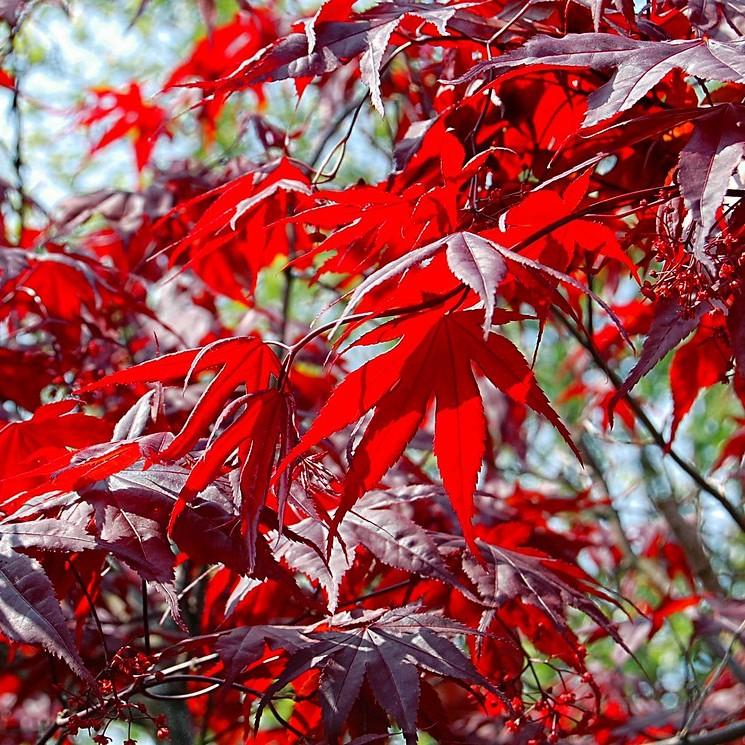
The Bloodgood Japanese Maple is the foundational tree of this garden style, with deep burgundy foliage that holds its color from spring through fall, matching the moody, elegant aesthetic of Page’s Mill House grounds. This slow-growing deciduous tree reaches 15 to 20 feet tall at maturity, making it a perfect focal point for a medium or large yard. In spring, it produces tiny, delicate red flowers that add subtle contrast to its dark leaves before giving way to small, winged seed pods later in the season.
This maple is fully pet-safe, loves full sun, and thrives in humid conditions, so it works well in most regions of the U.S. and UK with regular summer rainfall. To keep it healthy:
- Plant in well-draining, slightly acidic soil
- Water deeply once a week during extended dry spells
- Prune lightly in late winter to remove dead branches and maintain its natural rounded shape
Jiro Shidare Japanese Maple: The Weeping Focal Point
If you have a water feature, stone bench, or raised garden bed, the Jiro Shidare Japanese Maple is the perfect addition, mirroring the cascading trees spotted near the streams on Plant’s Worcestershire farm. This weeping maple has long, draping branches that reach 8 to 10 feet tall and 10 to 12 feet wide at maturity, creating a lush, shaded nook underneath its canopy. In fall, its green foliage turns bright crimson, adding a fiery pop of color to your landscape as the weather cools.
Like the Bloodgood, this variety is pet-safe, full-sun loving, and humidity tolerant. The best way to show off its draping growth is to plant it in a raised spot, such as on a small slope or in a large elevated planter, so its branches can hang freely without crowding nearby plants. It requires the same well-draining soil and weekly watering schedule as other Japanese maples, and rarely needs pruning beyond removing dead growth.
Kandy Kitchen Japanese Maple: The Bold Color Pop
For a more playful, vibrant addition that fits the creative energy of both musicians’ landscaping choices, try the Kandy Kitchen Japanese Maple. This compact variety only reaches 6 to 8 feet tall at maturity, making it ideal for small yards, side garden beds, or even large containers. Its new growth comes in bright red and white variegated hues that fade to a deep green as the leaves mature, creating a dynamic, multi-tonal look that stands out next to darker maple varieties.
This maple is pet-safe, full-sun tolerant, and adapts well to most humid climates. It prefers slightly acidic soil, so if you notice its leaves yellowing or browning at the edges, it may be a sign your soil pH is off. You can snap a photo of the discolored leaves in Sproutly to troubleshoot the issue and get specific amendment tips for your space.
Understory Plants to Pair With Your Page and Plant Style Trees
Japanese maples have shallow root systems that don’t compete heavily with lower-growing plants, making them easy to pair with understory foliage to create the layered, wild look common in the musicians’ gardens. All of these picks are pet-safe and low-fuss:
- Amur Maple: A small, shrub-sized maple that only reaches 10 to 15 feet tall, with bright green summer foliage that turns fiery red in fall. It thrives in full sun, is humidity tolerant, and works well as a medium-height layer between tall Japanese maples and low ground cover.
- Astilbe ‘Heart and Soul’: A flowering perennial with feathery pink and white plumes that bloom from mid to late summer. It thrives in the partial shade cast by maple canopies, and its soft texture contrasts nicely with the sharp shape of maple leaves.
- American boneset ‘Milk and Cookies’: A pollinator-friendly perennial with clusters of tiny white blooms that attract butterflies and bees through late summer. It grows 2 to 3 feet tall, tolerates both full sun and partial shade, and adds a light, airy feel to dense garden beds.
To keep these understory plants healthy, water them at the base to avoid getting maple leaves wet, and add a 2-inch layer of mulch around their roots once a year to retain moisture.
Low-Fuss Accent Plants for Sunny Spots
For open, sunny borders or patio planters that don’t fit under a maple canopy, these low-maintenance picks add edge and color without requiring frequent care:
- American century plant: A sculptural succulent with thick, spiky blue-green leaves that grows 6 to 10 feet tall at maturity (though it grows very slowly, so it will stay small for years in a container). It is drought tolerant once established, only needs watering once every two to three weeks in dry weather, and is fully pet-safe. Its rugged, sharp shape adds a fun, unexpected edge to soft garden beds, perfect for rock fans who want a low-fuss statement plant.
- Astilbe ‘Alive and Kicking’: A bright red variety of astilbe that produces bold plumes from mid to late summer. It tolerates partial sun, and its vibrant color pairs well with the burgundy and red foliage of Japanese maples. It needs regular watering to thrive, so it’s a good pick for spots that get regular rainfall or are easy to access with a hose.
How to Design Your Own Page and Plant Inspired Garden
You don’t need acres of land to capture the vibe of the pair’s iconic gardens. Follow these three simple tips to build your own rock-and-roll outdoor space:
- Prioritize layered foliage: Start with tall statement trees like the Bloodgood Japanese Maple at the back of your bed or yard, add medium shrubs like the Amur Maple in the middle, and finish with low perennials like astilbe and American boneset at the front. This creates the lush, overgrown feel of an English country garden without looking messy.
- Lean into a moody color palette: Stick to deep red, burgundy, and green foliage as your base, with small pops of white, pink, or red from blooms. This matches the brooding, atmospheric aesthetic of Led Zeppelin’s discography, and requires less frequent replacement than a garden focused on high-maintenance annual flowers.
- Verify plant compatibility before you buy: If you’re picking up plants from a local nursery and aren’t sure if they will thrive in your yard’s sun, soil, or climate conditions, snap a photo of the tag or foliage in Sproutly to confirm care requirements and check for any pet toxicity risks before you bring them home.
FAQ
Are the plants in a Page and Plant style garden safe for pets?
All the plants listed in this guide are pet-safe, so you don’t have to worry if your dog or cat nibbles on leaves while exploring your garden. If you add other plants to your space, you can use Sproutly to confirm they’re non-toxic for your pets.
Do Japanese maples need a lot of sun to grow well?
The Japanese maple varieties listed here thrive in full sun, though they can tolerate a few hours of partial shade in hotter climates. They also love humid conditions, so they’re a great fit for regions with regular summer rain.
Can I grow these Page and Plant garden plants in containers?
Smaller varieties like the Kandy Kitchen Japanese Maple, astilbe, and American century plant grow well in large containers with drainage holes. Just make sure to water container plants more frequently than in-ground plantings, as they dry out faster.
What’s the best way to identify plants I see in photos of Jimmy Page or Robert Plant’s gardens?
If you have a clear photo of a mystery plant, you can use Sproutly’s plant identification feature to learn its name, care requirements, and whether it’s a good fit for your own garden.
Final Thoughts
Even if you only have a small patio or side yard, you can capture the laid-back, creative vibe of the pair’s gardens with a few potted maples and astilbe. The goal is to prioritize plants that bring you joy, not to perfectly replicate a historic estate landscape.
Whether you’re troubleshooting yellowing maple leaves, identifying a mystery plant you spotted in a behind-the-scenes tour photo, or confirming a new addition is pet-safe, Sproutly is here to help you every step of the way.
Try Sproutly today to build your own rock-and-roll garden with confidence.
Похожие статьи
Ещё руководства, которые вам понравятся
China Aster: Complete Care, Growing Guide, and Varieties
Learn how to grow and care for China aster (Callistephus chinensis), a pet-safe, full-sun flower that delivers long-lasting garden color for months.
2026-07-04 · 17 min read
Chinese Evergreen: Care Guide, Varieties, and Growing Tips for Aglaonema
Learn how to care for Chinese evergreen (Aglaonema) houseplants, plus top varieties, troubleshooting tips, and pet safety details for this low-fuss indoor plant.
2026-07-04 · 14 min read
Caryopteris Clandonensis Heavenly Blue: Care, Size, and Growing Guide
Learn how to grow and care for Caryopteris Clandonensis Heavenly Blue, a pet-safe, flowering bluebeard shrub ideal for full-sun gardens.
2026-07-03 · 8 min read