8 Unique Plant Species to Grow in Full-Sun Outdoor Spaces (All Pet-Safe)
Explore low-fuss, pet-safe plant species for full-sun outdoor gardens, from trailing groundcovers to flowering shrubs that thrive with minimal upkeep.
All plants listed are verified non-toxic to dogs and cats, require at least 6 hours of daily unfiltered direct light to thrive, and have minimal routine upkeep needs for new gardeners. Options span trailing groundcovers, compact shrubs, ornamental trees, and edible fruiting varieties to suit every full-sun outdoor space, and you can reference our plant species care guide for general best practices for any cultivar you pick.
Key Traits to Look for in Low-Fuss Full-Sun Plant Species
The most low-maintenance full-sun plant species need at least 6 hours of unfiltered direct light daily to thrive, have built-in drought or humidity tolerance, non-toxic foliage for households with pets, and minimal pruning requirements to cut down on routine upkeep.
- Pet-safe foliage and blooms, with no toxic compounds that pose a risk if ingested by curious dogs or cats
- Confirmed full-sun tolerance (6+ hours of unfiltered daily light) to avoid sparse growth or failed blooming
- Drought or humidity adaptability to match your local climate and reduce regular watering needs
- Beginner-friendly care needs, with no strict fertilizing, pruning, or soil amendment requirements
If you come across an unlabeled plant at a nursery or plant swap, Sproutly can scan it to check its light requirements and toxicity status before you add it to your garden.
Flowering Groundcovers for Full Sun
Dichondra argentea ‘Silver Falls’ is a trailing flowering plant species that grows 2–4 inches tall and spreads up to 4 feet wide, making it ideal for hanging baskets, rock garden edges, or groundcover between pavers. It is drought-tolerant, so it only needs water every 10–14 days once established, and its silvery foliage holds up well even in peak summer heat.
Care Snapshot for Dichondra argentea ‘Silver Falls’
- Water only when the top 2 inches of soil are completely dry to avoid root rot
- No fertilizer is needed if planted in poor, well-drained soil
- Trim back leggy growth in early spring to encourage dense, full foliage
- Non-toxic to dogs, cats, and other household pets
For more cultivar-specific guidance, see the full Dichondra argentea 'Silver Falls' care profile.
Compact Flowering Shrubs for Garden Borders
Abelia ‘Rose Creek’ is a compact evergreen shrub that grows 2–3 feet tall and 3–4 feet wide, with white and pink spring blooms that attract native bumblebees and butterflies. It thrives in high-humidity environments, and its dense, rounded habit works well as a low border along walkways or as a foundation planting near home exteriors.
Care Snapshot for Abelia ‘Rose Creek’
- Water weekly during the first growing season to help roots establish deep in the soil
- Prune 1/3 of old growth in late winter to boost blooming volume for the upcoming spring
- Avoid overwatering, as this shrub is prone to root rot in soggy soil
- Non-toxic to pets, so it is safe to plant along frequently used walkways where animals may pass
For more detailed planting guidance, check the Abelia 'Rose Creek' growing guide.
Purple-Foliage Groundcovers for Visual Contrast
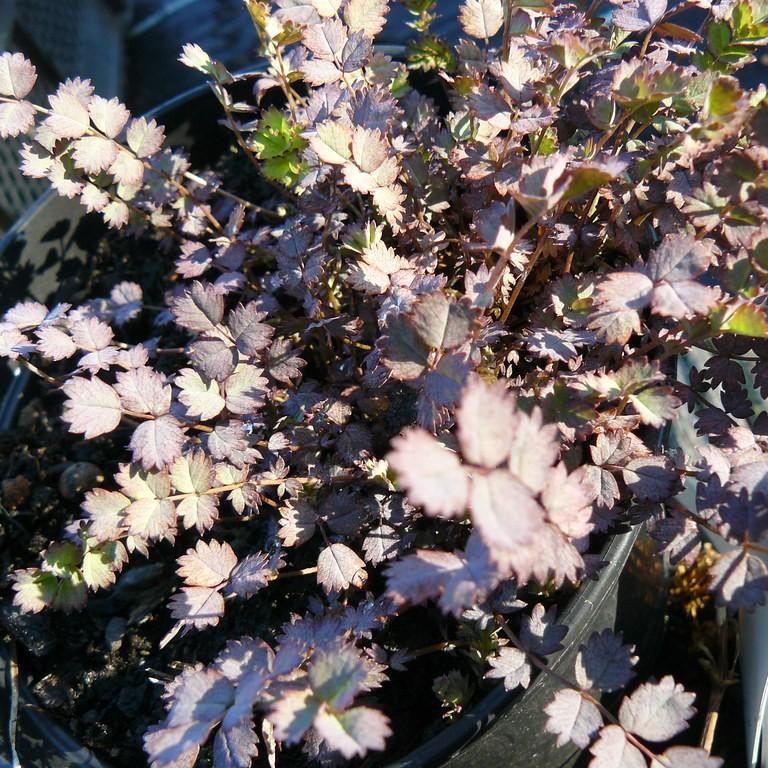
Acaena inermis ‘Purpurea’, also called Purple Rodless Briar, is a low-growing woody plant with deep purple foliage that turns bronze in temperatures below 40°F, and tiny round red seed heads in late summer. It grows 2–6 inches tall and spreads up to 2 feet wide, making it a colorful filler between stone paths or in rock gardens.
Care Snapshot for Acaena inermis ‘Purpurea’
- Tolerant of light foot traffic, so it works well between pavers on lightly used garden paths
- Water every 7–10 days during extended dry spells (2+ weeks without rain)
- Remove spent seed heads in late summer if you want to prevent self-seeding across your garden
- Non-toxic to pets, even if they occasionally nibble the foliage or seed heads
Flowering Trees for Temperate Climates
Magnolia x soulangeana ‘Alexandrina’, or the Alexandrina Saucer Magnolia, is a deciduous flowering tree that grows 10–20 feet tall, with large pink and white cup-shaped blooms that emerge in early spring before foliage appears. It is hardy in USDA zones 4–9, and its blooms are resistant to light late frosts that often damage other early-flowering magnolia cultivars.
Care Snapshot for Alexandrina Saucer Magnolia
- Plant in well-drained, slightly acidic soil for best growth and blooming
- Water deeply twice monthly during dry summer months when there is less than 1 inch of rain per week
- Avoid pruning except to remove dead or damaged branches, as excessive pruning can reduce spring bloom volume
- All parts of the tree are non-toxic to pets, including fallen blooms and foliage
Edible Fruit Trees for Dual-Purpose Gardens
Amelanchier laevis, or Allegheny serviceberry, is a small fruit tree that grows 15–25 feet tall, with white spring blooms, edible dark purple berries in early summer, and bright orange fall foliage. Its berries taste like sweet blueberries, and can be eaten raw, baked into pies, or made into jams.
Care Snapshot for Allegheny Serviceberry
- Tolerant of most soil types, including clay, sand, and loam, as long as the soil drains well
- Water weekly during the first 2 years of growth to help roots establish
- Netting can be used to protect ripening berries from birds if you plan to harvest fruit for personal use
- All parts of the tree are non-toxic to pets, including the berries, foliage, and bark
For tips on when and how to harvest ripe berries, read our Allegheny serviceberry harvest tips guide. If you are looking for more pet-safe fruiting tree options, our Berry Trees Identification: A Beginner’s Guide to Common Ornamental, Pet-Safe, a covers additional varieties suitable for full-sun spaces.
How to Confirm a Plant’s Care Needs Before Planting
Misidentifying a plant species is one of the most common reasons for garden failure, as care requirements like watering frequency and light needs vary widely across cultivars, even within the same genus. Taking 1–2 minutes to confirm a plant’s identity and core needs before planting can save months of troubleshooting yellow leaves or stunted growth.
- Snap a clear photo of the plant’s key identifying features, including foliage, blooms, fruit, or bark, depending on what is visible at the time of purchase.
- Use the Sproutly app to scan the plant for an accurate ID, which will distinguish between similar-looking cultivars that have different care needs.
- Review the integrated care profile to confirm the plant fits your garden’s light levels, soil type, and climate conditions before you place it in the ground.
FAQ
What is the most drought-tolerant full-sun plant species for pet owners?
Dichondra argentea ‘Silver Falls’ is the most drought-tolerant option on this list, needing water only every 10–14 days once established, and it is non-toxic to dogs, cats, and other household pets.
Can any of these plants grow in partial shade?
All these plants are adapted for full sun (6+ hours of direct light daily). While some may survive in partial shade, they will produce fewer blooms, have sparser foliage, and be more prone to pest issues without enough direct light.
Are there any edible plants on this list that are safe for pets?
Allegheny serviceberry produces edible berries that are safe for both humans and pets to eat, and its foliage and stems are also non-toxic to dogs and cats.
How do I identify an unknown plant in my garden?
You can use the Sproutly app to scan a clear photo of the plant’s foliage, blooms, or fruit to get an accurate species ID, plus a full care guide tailored to that specific cultivar.
Try Sproutly
Ready to build a low-fuss, pet-safe full-sun garden without the guesswork? Sproutly helps you identify any plant in seconds, confirm its toxicity status, and access personalized care guides tailored to your local climate and garden conditions. Try Sproutly today to simplify your gardening routine.
Gerelateerde lectuur
Meer gidsen die je misschien leuk vindt
Plant Disease Identification: How to Spot Common Issues and Prevent Spread
Learn step-by-step plant disease identification to spot fungal, bacterial, and viral issues early, plus how to protect susceptible and disease-resistant plants in your space.
2026-06-24 · 9 min read
Trees in Florida Identification Guide: 7 Common Native and Cultivated Species to Spot
Identify trees across Florida with this practical guide: recognize key foliage, flower, and bark traits for common species found in yards, parks, and wild spaces.
2026-06-24 · 10 min read
Tropical Plant Care Guide for California: Grow Thriving Tropicals Indoors & Out
Learn how to grow tropical plants in California’s varied climate, from indoor humidity tips to outdoor sun-tolerant varieties that thrive in Golden State conditions.
2026-06-24 · 12 min read