Strawberry Tree: Complete Care, Identification, and Usage Guide for Arbutus unedo
Learn to identify, grow, and use the strawberry tree (Arbutus unedo), a pet-safe evergreen that produces edible fruit and year-round garden interest.
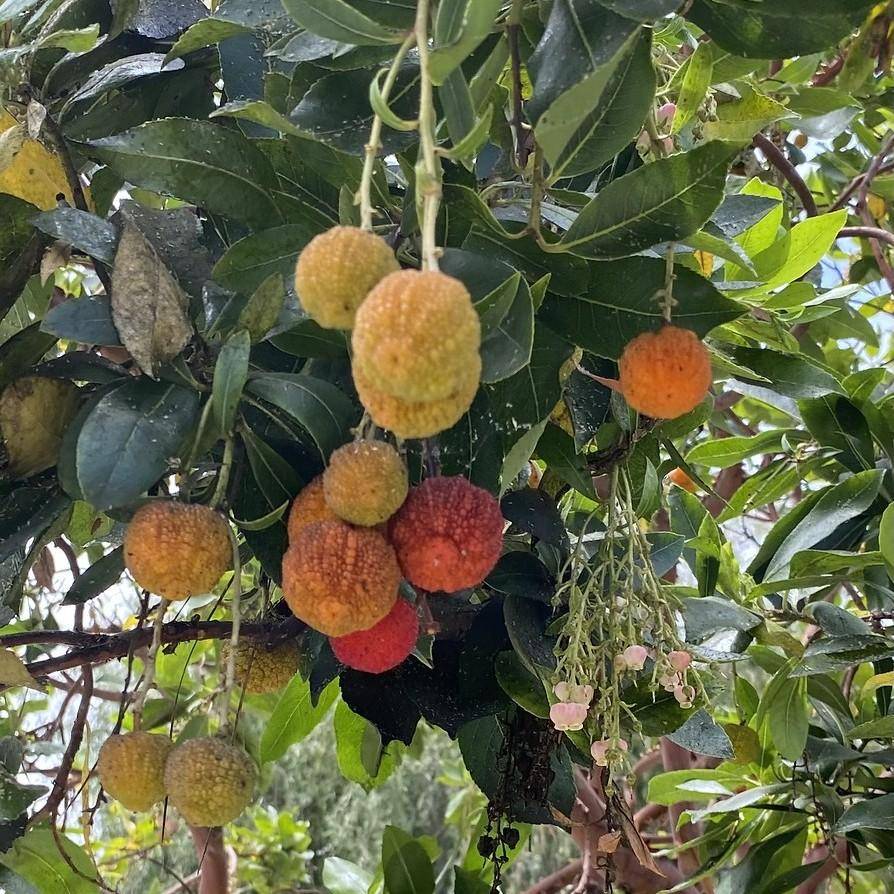
The strawberry tree (Arbutus unedo) is a slow-growing evergreen tree or large shrub prized for year-round garden interest, edible red fruit, and pet-safe foliage. It thrives in USDA zones 7–10, needs 6 hours of full sun daily, and requires minimal maintenance once established.
What Is a Strawberry Tree (Arbutus unedo)?
This slow-growing evergreen in the Ericaceae family reaches 8–35 feet tall at maturity depending on cultivar, with peeling reddish-brown bark, glossy serrated leaves, and bell-shaped fall flowers. Its round, bumpy red fruit takes 12 months to ripen, and it is unrelated to common groundcover strawberries. Sproutly can help you distinguish this plant from lookalike broadleaf evergreens in seconds by scanning its leaves or fruit, and you can find more species details on our strawberry tree care guide encyclopedia page.
Key Identifying Features
You can identify this plant by its unique combination of year-round traits:
- Peeling, reddish-brown bark that reveals smoother orange or gray underbark on mature branches
- 2–4 inch long, glossy dark green leaves with finely serrated edges, arranged alternately on stems
- Drooping clusters of ¼-inch bell-shaped flowers, similar in shape to blueberry blooms, that appear in fall
- ½–1 inch round, bumpy red fruit that grows alongside new flower clusters, as it takes a full year to ripen If you are unsure if a tree you found matches these traits, our guide how to identify a strawberry tree and other common broadleaf evergreens walks you through step-by-step verification steps.
Common Misconceptions
The most widespread misconception about this plant is that it produces the same fruit as common garden strawberries. The two plants are not related: common strawberries are low-growing groundcover in the Rosaceae family, while this woody evergreen is in the Ericaceae family, closely related to blueberries and rhododendrons. The only similarity is the superficial appearance of their red, bumpy fruit. Another common misconception is that the tree is tropical; it is actually highly cold-tolerant, surviving brief dips to 10°F once established.
Strawberry Tree Taxonomy and Common Cultivars
The primary species is Arbutus unedo, native to the Mediterranean region and western Europe. Four widely grown cultivars and hybrids are available for home gardens, each with unique growth habits and bloom characteristics, and all are pet-safe for households with dogs or cats.
- Arbutus unedo: The standard species, with 1-inch red fruit and white fall flowers, reaching 15–35 feet tall at maturity.
- Arbutus unedo 'Oktoberfest': A compact dwarf cultivar that grows 6–8 feet tall, with abundant white flower clusters and improved drought tolerance.
- Marina Strawberry Tree (Arbutus 'Marina'): A larger hybrid with pink spring flowers and larger, sweeter fruit, reaching 20–30 feet tall.
- hybrid strawberry tree (Arbutus andrachnoides): A hybrid between Arbutus unedo and Arbutus andrachne, with exceptionally smooth peeling bark and high heat tolerance.
Arbutus unedo vs. Hybrid Varieties
Pure Arbutus unedo cultivars produce flowers exclusively in fall, and their fruit has a mild, slightly tart flavor with a grainy texture. Hybrid varieties, by contrast, often bloom in different seasons, have sweeter fruit, or feature more ornamental bark than the standard species. For example, Arbutus 'Marina' blooms in spring rather than fall, so its fruit ripening cycle is shifted by six months, while Arbutus andrachnoides has far smoother, more vibrant peeling bark than the standard species, making it a popular choice for ornamental landscaping. Hybrids are often grafted onto Arbutus unedo rootstock to improve their cold tolerance and disease resistance.
How to Tell Cultivars Apart
You can distinguish common cultivars by their size, bloom time, and flower color:
- Standard Arbutus unedo has white fall flowers and grows 15 feet or taller at maturity.
- Arbutus unedo 'Oktoberfest' stays under 8 feet tall, with dense white flower clusters in fall.
- Arbutus 'Marina' has pale pink flowers in spring, and its fruit is larger than the standard species.
- Arbutus andrachnoides has almost paper-smooth peeling reddish-orange bark, with white fall flowers. If you are unsure what cultivar you have, you can scan a leaf, flower, or bark sample with Sproutly to get a precise identification and custom care guidance.
Native Range and Ideal Growing Conditions
Wild populations grow natively across the Mediterranean Basin, from Portugal and Morocco to Turkey, and in isolated populations in western Ireland. It thrives in USDA hardiness zones 7 through 10, tolerating brief dips to 10°F once established. It prefers full sun and well-draining, acidic to neutral soil with a pH between 5.5 and 7.0. It is highly tolerant of coastal conditions, including salt spray and wind, making it a good choice for seaside gardens. It does not perform well in heavy clay soil that holds standing water for more than 24 hours after rain.
USDA Hardiness Zone Guidelines
Cold tolerance varies slightly by cultivar, so match your selection to your local climate:
- Standard Arbutus unedo is the most cold-tolerant, surviving brief drops to 10°F in zone 7 with no damage.
- Arbutus 'Marina' is slightly less cold-tolerant, best suited for zones 8 through 10, where winter temperatures rarely drop below 15°F.
- Arbutus unedo 'Oktoberfest' and Arbutus andrachnoides grow well in all zones 7 through 10, with no special winter protection needed for established trees. In zone 6, you can grow a strawberry tree in a container that you move indoors or to a protected garage during periods of extreme cold, as prolonged exposure to temperatures below 10°F will kill the tree.
Soil and Sunlight Requirements
This plant needs 6 hours of direct full sun daily to produce abundant flowers and fruit; it can tolerate partial shade, but growth will be slower, and bloom and fruit production will be reduced. They prefer well-draining, sandy or loamy soil with a pH between 5.5 and 7.0, though they can adapt to slightly alkaline soil as long as it drains well. Avoid planting them in heavy clay soil that holds standing water, as this will cause root rot within a few weeks. If your soil has poor drainage, plant the tree in a raised bed filled with a mix of topsoil and perlite to improve drainage, or amend heavy clay with 3 inches of compost mixed into the top 12 inches of soil before planting.
Full Care Routine
Mature plants are low-maintenance, requiring only occasional watering, annual pruning, and light fertilization to stay healthy. Young trees under 3 years old need more frequent care to establish strong root systems. Sproutly can send you custom reminders for watering and fertilizing based on your local climate and tree age.
- Watering: Newly planted trees need 1 inch of water per week for the first year. Established trees need 1 inch of water every 10–14 days during dry periods, and no supplemental water during rainy seasons.
- Fertilization: Apply a balanced, slow-release acidic plant fertilizer once per year in early spring, before new growth emerges.
- Pruning: Remove dead, damaged, or crossing branches in late winter to maintain air flow. You can prune to a single-trunk tree shape or leave it as a multi-stemmed shrub.
Watering Schedule for Young vs. Mature Trees
Watering needs vary significantly based on the age of your plant:
- First year after planting: Water 1 inch per week, applied slowly at the base of the tree to encourage deep root growth. Do not let the top 6 inches of soil dry out completely during this period.
- Second and third year: Reduce watering to 1 inch every 7–10 days during dry periods, only watering if there has been no rain for more than a week.
- Mature trees (4+ years old): Water 1 inch every 10–14 days only during extended dry periods of 2 weeks or more. These trees have deep root systems that can access groundwater, so overwatering is a far more common issue than underwatering. If you are unsure when to water, check the moisture level 4 inches below the soil surface; water only if the soil is completely dry at that depth.
Pruning Best Practices
This plant requires very little pruning, but annual light trimming will keep them healthy and maintain your desired shape:
- Prune in late winter, before new spring growth emerges, to avoid damaging new flower buds.
- First, remove all dead, diseased, or broken branches, cutting them back to healthy wood just above a leaf node.
- Next, remove any crossing or rubbing branches to improve air flow through the canopy, which reduces the risk of fungal disease.
- If you prefer a single-trunk tree, remove any suckers growing from the base of the trunk and prune lower branches to raise the canopy as the tree grows.
- If you are growing the tree as a shrub or privacy hedge, you can trim the outer growth to maintain a uniform shape, but avoid cutting back more than 1/3 of the tree’s total growth in a single year, as this can stress the plant.
Common Pests and Diseases to Watch For
This plant is relatively pest and disease resistant, but a few issues may occur under poor growing conditions:
- Root rot: Caused by overwatering or poorly draining soil, symptoms include yellowing leaves, wilting, and stunted growth. To prevent root rot, avoid overwatering and ensure soil drains well.
- Aphids: Small, soft-bodied insects that cluster on new growth, causing leaf curling and sticky honeydew residue. Wipe them off with a damp cloth or spray with insecticidal soap for severe infestations.
- Scale insects: Small, immobile brown or gray bumps on stems and leaf undersides, which suck sap from the plant. Scrape them off with a soft brush or apply horticultural oil in late winter to kill overwintering nymphs.
- Leaf spot: Fungal disease that causes small brown spots on leaves, most common in humid conditions with poor air flow. Remove affected leaves and avoid watering overhead to reduce spread. If you notice unusual spots, wilting, or pest damage on your plant, scan the affected area with Sproutly to get an accurate diagnosis and step-by-step treatment guidance.
How to Propagate a Strawberry Tree
These plants can be propagated from seed, semi-hardwood cuttings, or layering, though seed-grown trees may take 5–10 years to produce fruit. Cuttings are the most reliable method for growing new trees that match the parent cultivar’s characteristics.
- Take 6-inch semi-hardwood cuttings from healthy, current-year growth in late summer.
- Dip the cut end in rooting hormone, then plant in a well-draining potting mix of 50% perlite and 50% peat moss.
- Keep the cuttings in a humid, partially shaded area at 65–75°F for 3–6 months until roots form.
- Transplant rooted cuttings to larger pots, and grow indoors or in a protected area for 1–2 years before planting outdoors.
Seed Propagation Steps
Growing from seed is possible, but it is a slow process, and seed-grown trees may not have the same traits as the parent plant, especially if the parent is a hybrid:
- Collect fully ripe, soft red fruit from a mature tree in fall. Remove the flesh from the seeds, and rinse the seeds clean.
- Place the seeds in a plastic bag with damp peat moss, and store them in the refrigerator for 4–6 weeks to stratify, which breaks their dormancy.
- Sow the seeds ¼ inch deep in a well-draining seed starting mix, and keep the soil moist and at 65–70°F until germination, which takes 2–3 months.
- Transplant seedlings to 4-inch pots once they have 2 sets of true leaves, and grow them in a protected area for 2–3 years before planting outdoors. Seed-grown trees may take 5–10 years to produce their first fruit.
Cutting Propagation Success Tips
Cuttings are the most reliable way to propagate this plant, especially if you want to replicate a specific cultivar. Follow these tips to improve your success rate:
- Take cuttings from semi-hardwood growth, which is current-year growth that has started to harden, with mature leaves at the tip and softer growth at the base.
- Remove all leaves from the lower 2/3 of the cutting to reduce moisture loss, and make a clean 45-degree cut at the base to increase the surface area for rooting.
- Use a rooting hormone powder with indole-3-butyric acid (IBA) to speed root development; this cuts rooting time by 2–4 weeks and increases the success rate by up to 50%.
- Keep cuttings in a humid environment by covering the pot with a plastic bag or placing it in a propagation case, and mist the leaves daily to keep them hydrated.
- Do not transplant cuttings until you see new leaf growth, which indicates a strong root system has formed.
Are the Fruits Edible?
The red fruits are edible when fully ripe, though they have a mild, sweet-tart flavor and grainy texture that is less juicy than common garden strawberries. Unripe green fruits are astringent and may cause stomach upset if eaten raw. Ripe fruits are soft, deep red, and detach easily from the branch when gently pulled. The fruit contains small, hard seeds that are edible but can be strained out if desired. It is not a common commercial fruit because it bruises easily and has a short shelf life of 2–3 days after picking.
Flavor and Nutritional Profile
Ripe fruit has a mild, sweet-tart flavor often compared to a mix of apricot, pear, and cranberry, with a slightly grainy texture similar to quince. The fruit is low in calories, with about 40 calories per 100 grams, and is a good source of vitamin C, dietary fiber, and antioxidants including flavonoids and tannins. The small, hard seeds are edible, but many people choose to strain them out when using the fruit in cooked preparations for a smoother texture.
How to Tell When Fruit Is Ripe
The fruit takes 12 full months to ripen, so you will often see unripe green fruit alongside new flower clusters on the tree at the same time. The fruit is ripe when:
- It is a deep, uniform red color, with no green or yellow patches.
- It is soft to the touch, giving slightly when gently squeezed.
- It detaches easily from the stem when you pull it lightly; unripe fruit will stay firmly attached.
- The skin may have a slight, powdery bloom, similar to the skin of a plum, which is a sign of full ripeness. You can use Sproutly to track fruit ripening timelines based on your local climate, so you know exactly when to harvest your crop each year.
Culinary and Medicinal Uses
The fruit is most often used in cooked preparations, where its mild sweetness and high pectin content shine. It has also been used in traditional Mediterranean herbal medicine for hundreds of years to treat digestive and inflammatory issues. Culinary uses include: jams, jellies, fruit compotes, baked goods, and fermented beverages including wine and traditional Portuguese medronho brandy. Medicinal uses include: dried leaf infusions for sore throats, and fruit extracts used to support digestive health. Always consult a healthcare provider before using any plant for medicinal purposes.
Easy Jam Recipe
The fruit’s high pectin content makes it ideal for jam, which requires no added pectin to set. Try this simple recipe:
- Collect 2 pounds of fully ripe fruit, and rinse them well. Remove any stems or leaves.
- Place the fruit in a large pot, and add 1 cup of water. Bring to a simmer, and cook for 10 minutes until the fruit is soft.
- Mash the fruit with a potato masher, then strain the mixture through a fine-mesh sieve to remove the seeds, if desired.
- Return the strained fruit pulp to the pot, add 1.5 cups of granulated sugar and the juice of 1 lemon, and stir to combine.
- Bring the mixture to a rolling boil, stirring frequently, and cook for 15–20 minutes until it reaches the gel stage (220°F on a candy thermometer).
- Pour the hot jam into sterilized jars, seal, and process in a water bath canner for 10 minutes for long-term storage, or store in the refrigerator for up to 3 weeks.
Traditional Medicinal Applications
In traditional Mediterranean herbal medicine, all parts of the plant have been used for medicinal purposes:
- Dried leaves are brewed into a tea used to soothe sore throats, reduce coughs, and support digestive health, thanks to their high tannin content which has astringent and anti-inflammatory properties.
- Ripe fruit is eaten fresh or made into syrups used to treat diarrhea and other digestive issues.
- Bark extracts have been used topically to treat minor wounds and skin irritations, as they have mild antiseptic properties. Modern research has confirmed that extracts have high antioxidant content, but always consult a healthcare provider before using any part of the plant for medicinal purposes, especially if you are pregnant, nursing, or taking medication.
Landscaping Uses
This versatile evergreen offers year-round interest, with evergreen foliage, fall flowers, and ripening fruit that stays on the tree for 12 months. It works well as a specimen tree, privacy screen, or hedgerow plant, and its deep root system makes it suitable for planting near sidewalks and patios. It supports local pollinators, including bees and butterflies, that feed on its fall nectar when few other flowers are in bloom. Birds also eat the ripe fruit, making it a good addition to wildlife-friendly gardens.
Small Garden Cultivar Recommendations
If you have limited space, choose a compact cultivar that will not outgrow your yard:
- Arbutus unedo 'Oktoberfest' is the best choice for small gardens, as it only grows 6–8 feet tall and wide, with a dense, rounded shape that works well as a focal point or in a large container.
- Dwarf grafted varieties of Marina Strawberry Tree (Arbutus 'Marina') are also available, growing 10–15 feet tall, which is smaller than the standard hybrid size. Both dwarf cultivars can be grown in 15–20 gallon containers, making them suitable for patios, balconies, or rooftop gardens in areas where in-ground planting is not possible.
Companion Plants
These trees grow well with other plants that prefer acidic, well-draining soil and full sun:
- Low-growing Ericaceae family plants, including blueberries, cranberries, and rhododendrons, have similar soil and water needs, and their shallow root systems will not compete with the tree’s deep roots.
- Drought-tolerant Mediterranean herbs, including rosemary, thyme, and lavender, thrive in the same sunny, well-draining conditions, and their fragrant foliage repels many common garden pests.
- Native wildflowers, including California poppies and coneflowers, attract additional pollinators to the garden, which will increase fruit set on your tree. Avoid planting water-loving plants, including hostas and ferns, near these trees, as they require more frequent watering that can lead to root rot.
Frequently Asked Questions
Is the strawberry tree related to regular strawberries?
No, the strawberry tree (Arbutus unedo) is an evergreen tree in the Ericaceae family, while common garden strawberries are low-growing groundcover plants in the Rosaceae family. The only similarity is the appearance of their red, bumpy fruit.
Are strawberry trees toxic to dogs or cats?
No, all parts of the strawberry tree are non-toxic to dogs, cats, and horses, making it a safe choice for pet-friendly yards. The ripe fruit is also safe for pets to eat in small quantities.
How long does it take a strawberry tree to produce fruit?
Strawberry trees grown from seed typically take 5–10 years to produce their first fruit. Grafted or nursery-grown trees may produce fruit as early as 2–3 years after planting.
Can you grow a strawberry tree in a container?
Yes, dwarf cultivars like Arbutus unedo 'Oktoberfest' grow well in large 15–20 gallon containers. Keep the container in full sun, and water it more frequently than in-ground trees, as container soil dries out faster.
What is the difference between Arbutus unedo and Arbutus 'Marina'?
Arbutus unedo is the standard species, with white fall flowers and smaller fruit. Arbutus 'Marina' is a hybrid cultivar with pink spring flowers, larger, sweeter fruit, and faster growth, reaching up to 30 feet tall at maturity.
Try Sproutly
Need help identifying a strawberry tree, diagnosing a pest issue, or tracking when your fruit will ripen? Sproutly’s plant identification and care tools make growing any plant, from evergreen trees to houseplants, simple for beginners and experienced gardeners alike. Get started with Sproutly today.
Lecturas relacionadas
Más guías que podrían interesarte
Melon Fruit: Types, Nutrition, Growing Tips, and Selection Guide
Learn all about melon fruit, including popular varieties, nutritional benefits, how to grow them at home, and how to pick perfectly ripe melons every time.
2026-06-26 · 13 min read
Wild Flower Names: 8 Common, Distinct Species to Identify and Grow
Learn common wild flower names, key identifying traits, and growing tips for popular native and ornamental species perfect for pollinator gardens and low-maintenance landscapes.
2026-06-24 · 10 min read
Watermelon: Complete Growing, Nutrition, and Usage Guide
Learn how to grow watermelon, plus its nutrition, health benefits, varieties, and potential side effects in this comprehensive, beginner-friendly guide.
2026-06-23 · 12 min read