Montbretia Lucifer: Complete Care, Growing, and Design Guide
Learn how to grow and care for montbretia Lucifer, a vibrant red-flowering crocosmia cultivar ideal for sunny, humid garden beds and pollinator-friendly landscapes.
Montbretia Lucifer: Complete Care, Growing, and Design Guide
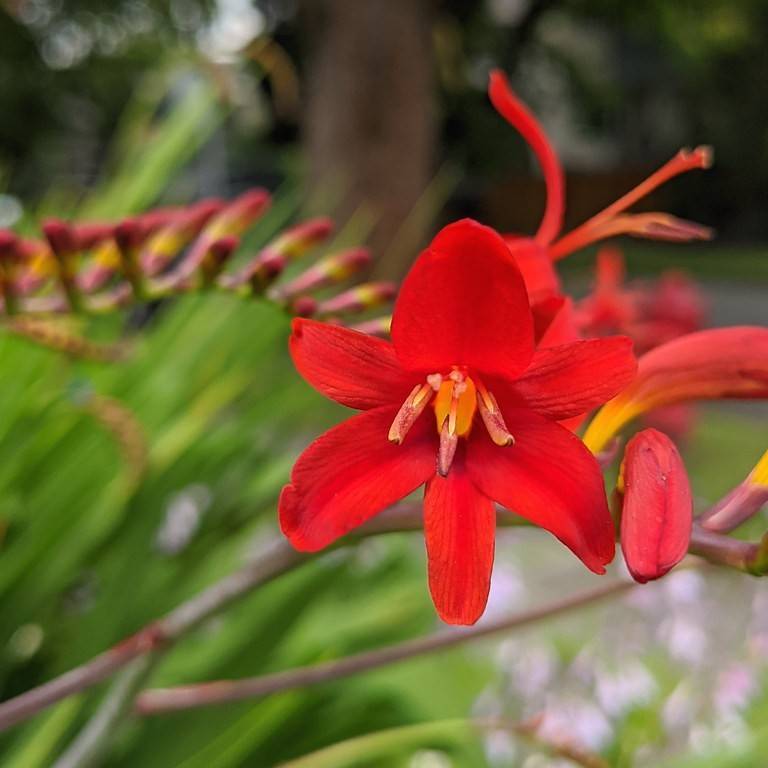
Montbretia Lucifer is a red-flowering Crocosmia x crocosmiiflora cultivar grown for its long summer bloom period, upright clumping growth habit, and pollinator appeal. It thrives in full sun, well-draining soil, and USDA Zones 5 through 9, and is safe for yards with dogs, cats, and horses.
Montbretia Lucifer Core Basics & Botanical Classification
Montbretia Lucifer is the common name for the Crocosmia x crocosmiiflora 'Lucifer' cultivar, a flowering herbaceous perennial in the Iridaceae family. It is often grouped with other montbretia varieties, which are all types of crocosmia developed for garden use. This cultivar is distinct for its vivid, upward-facing crimson red blooms, unlike the orange or yellow hues of most other common montbretia cultivars.
Key Botanical & Common Name Details
- Botanical name: Crocosmia x crocosmiiflora 'Lucifer'
- Common names: Montbretia Lucifer, Lucifer crocosmia, falling stars Lucifer
- Plant type: Herbaceous perennial flowering bulb/corm
Many gardeners confuse this cultivar with similar orange-red montbretia varieties, including Crocosmia 'Bressingham Beacon' montbretia and Crocosmia 'Emberglow' montbretia. If you are unsure which cultivar you have, the Sproutly app can identify it from a photo of the blooms or foliage, and suggest tailored care adjustments for your specific plant. You can browse other montbretia (Crocosmia) cultivars in the Sproutly plant encyclopedia to compare bloom colors, sizes, and growth habits.
Montbretia Lucifer Mature Size and Growth Habit
Montbretia Lucifer reaches a maximum height of 2 to 4 feet at full maturity, with a spread of 1 to 2 feet per clump. It grows in upright, clumping formations with narrow, sword-shaped dark green foliage that stays lush from early spring through late fall in moderate climates. Unlike shorter crocosmia cultivars, its tall stems make it ideal for the back of border plantings.
Size By Growth Stage
- First year after planting: 1 to 2 feet tall, limited bloom production
- Second year and beyond: 3 to 4 feet tall, full 6 to 8 week bloom period
- Clump spread: Increases by 2 to 3 inches per year as corms multiply underground
The tall, rigid stems rarely require staking, even when fully loaded with blooms, which sets it apart from shorter, floppier crocosmia varieties. This makes it a good choice for low-maintenance garden beds where regular staking is not practical. For a shorter, more compact flowering bulb option with similar humidity-loving requirements, see the Amazon Lily Plant: Care Guide, ID Tips, and Growing Requirements.
Recommended USDA Hardiness Zones for Montbretia Lucifer
Montbretia Lucifer grows reliably as a perennial in USDA Hardiness Zones 5 through 9. In Zone 5, it requires a 2 to 3 inch layer of mulch over the corms in late fall to protect them from repeated freeze-thaw cycles. In Zones 10 and above, it may be grown as an annual, as it does not receive the required cool dormant period to rebloom the following year.
Zone-Specific Care Adjustments
- Zone 5: Plant corms 4 inches deep (1 inch deeper than standard) for extra cold protection
- Zones 6 to 8: No special winter protection required for established clumps
- Zone 9: Provide partial afternoon shade to prevent foliage scorch during summer heatwaves
If you live in a Zone 5 area with unseasonably cold winters, you can also dig up corms in late fall, store them in a cool, dry location between 40 and 50°F for the winter, and replant them the following spring. This method guarantees corm survival even in years with extended below-freezing temperatures.
Sunlight and Exposure Requirements for Montbretia Lucifer
Montbretia Lucifer requires full sun, defined as 6 to 8 hours of direct unfiltered sunlight per day, to produce maximum blooms. It will tolerate light partial shade, but too much shade will cause stems to become leggy, flop over, and produce fewer than half the expected number of flower spikes. Avoid planting it near large trees or shrubs that will block midday sun.
Signs of Incorrect Exposure
- Yellowing, scorched leaf edges: Too much intense direct sun in hot climates
- Few to no blooms, leaning stems: Too much shade
- Pale green foliage: Insufficient sunlight to support healthy photosynthesis
If you are planting in a region with frequent summer heatwaves above 90°F, you can place a temporary shade cloth over plants during the hottest afternoon hours to prevent foliage damage without reducing overall bloom production. Remove the cloth once temperatures drop below 85°F to restore full sun access.
Montbretia Lucifer Bloom Time and Flower Characteristics
Montbretia Lucifer blooms from mid-summer through early fall, with an average bloom period of 6 to 8 weeks in optimal conditions. Each flower spike holds 10 to 20 individual tubular crimson red blooms that open sequentially from the bottom of the spike upward, extending the total display time. The blooms produce mild nectar that attracts hummingbirds, bees, and butterflies to the garden.
Tips for Extending Bloom Time
- Deadhead spent flower spikes as soon as the last bloom fades to encourage secondary spike production
- Apply a balanced 10-10-10 fertilizer once in early spring as new foliage emerges
- Water deeply once per week during prolonged dry periods in the summer to prevent bud drop
The upward-facing blooms are also ideal for cut flower arrangements, as they stay fresh for 7 to 10 days in a vase with regular water changes. Cut stems when the bottom 2 to 3 blooms on the spike have opened, and leave at least half the foliage on the plant to support corm development for the next year’s growth.
How to Plant Montbretia Lucifer Bulbs (Corms)
Montbretia Lucifer grows from underground corms, often incorrectly called bulbs, that should be planted in early spring after the last frost date has passed. Plant corms 3 inches deep and 6 to 8 inches apart in well-draining soil, with the pointed growing tip facing upward. If you are unsure of the top/bottom orientation of your corms, you can use the Sproutly app to confirm proper planting position for your specific corms. Avoid planting in heavy clay soil that holds standing water, as this will cause corms to rot within 2 to 4 weeks of planting.
Step-by-Step Planting Instructions
- Loosen soil to a depth of 8 to 10 inches to allow for unobstructed root growth
- Mix 2 inches of compost into the planting area to improve drainage and add nutrients
- Place corms 3 inches deep, spaced 6 inches apart for smaller clumps, or 8 inches apart for larger, more spread-out formations
- Cover with soil and water deeply to settle the soil around the corms
- Mulch with 1 inch of shredded bark to retain moisture and suppress weed growth
If you are planting in a container, use a pot with drainage holes that is at least 12 inches deep, and fill it with a well-draining potting mix designed for outdoor perennials. Container-grown montbretia Lucifer will require more frequent watering than in-ground plants, as soil in pots dries out faster during hot weather.
Ongoing Montbretia Lucifer Care and Maintenance
Montbretia Lucifer requires minimal ongoing maintenance once established, making it suitable for low-effort garden beds. It is humidity-loving and tolerates occasional drought, but performs best when watered deeply once per week during periods with less than 1 inch of rainfall. It is also non-toxic to dogs, cats, and horses, so it is safe to plant in yards with free-roaming pets.
Annual Maintenance Tasks
- Cut back dead foliage to 2 inches above the ground in late fall or early spring before new growth emerges
- Divide clumps every 3 to 4 years in early spring to prevent overcrowding and improve bloom production
- Apply a thin layer of compost each spring to replenish soil nutrients without over-fertilizing, which can cause excess foliage growth at the expense of blooms
When dividing clumps, dig up the entire root mass, gently separate individual corms, and replant the largest, healthiest corms at the standard 3 inch depth and 6 to 8 inch spacing. Discard any small, shriveled, or rotting corms, as they will not produce healthy growth. You can share extra corms with other gardeners, or plant them in other areas of your yard to expand your display.
Companion Plants for Montbretia Lucifer
Montbretia Lucifer pairs well with other full-sun, humidity-loving perennials that share similar water and soil requirements. Its tall, upright growth habit and bright red blooms create a striking contrast with plants that have softer foliage, purple or blue flowers, or lower growing mounding forms. Avoid pairing it with aggressive spreaders that will compete for root space and block sunlight.
Recommended Companion Plant Pairings
- Ornamental grasses (switchgrass, fountain grass): Adds soft texture contrast and similar height
- Agapanthus: Blue or white blooms complement red montbretia flowers and share identical sun requirements
- Salvia: Deep purple blooms create a high-contrast color palette and attract additional pollinators
- Sedum: Low-growing succulent foliage fills in gaps around montbretia clumps and tolerates the same dry soil conditions
For a cohesive pollinator garden design, plant montbretia Lucifer in groups of 5 to 7 corms, interspersed with groups of 3 to 5 companion plants of each type. This creates a natural, layered look that maximizes visual appeal and provides consistent food sources for pollinators throughout the growing season.
Common Montbretia Lucifer Problems and Solutions
Montbretia Lucifer is relatively pest and disease resistant, but it can develop issues if grown in incorrect conditions. The most common problems are corm rot from overwatering, spider mite infestations during hot, dry periods, and lack of blooms from insufficient sun or overcrowding. If you notice unusual leaf spotting or pest damage you cannot identify, upload a photo to the Sproutly app for a fast diagnosis and targeted treatment recommendations.
Troubleshooting Common Issues
- Corm rot: Yellowing, wilting foliage early in the season; improve drainage or move to a raised bed to prevent standing water
- Spider mites: Fine webbing on leaf undersides, stippled yellow foliage; spray with insecticidal soap once per week for 3 weeks to eliminate infestations
- No blooms: Confirm the plant receives at least 6 hours of full sun per day, and divide overcrowded clumps to reduce competition for nutrients
In most cases, issues with montbretia Lucifer can be resolved by adjusting growing conditions to match its preferred requirements. Regular monitoring of foliage and bloom production will help you catch problems early, before they cause permanent damage to the clump.
Frequently Asked Questions
Is montbretia Lucifer the same as crocosmia Lucifer?
Yes, montbretia Lucifer is the common name for the Crocosmia x crocosmiiflora 'Lucifer' cultivar. Montbretia is an outdated genus name that is still used colloquially for many garden crocosmia varieties, including 'Lucifer'.
How tall does montbretia Lucifer grow?
Montbretia Lucifer grows 2 to 4 feet tall at full maturity, with a spread of 1 to 2 feet per clump. First-year plants are typically shorter, reaching 1 to 2 feet tall in their first growing season.
Is montbretia Lucifer toxic to pets?
No, montbretia Lucifer is non-toxic to dogs, cats, and horses, making it safe to plant in yards with free-roaming pets.
When should I plant montbretia Lucifer bulbs?
Plant montbretia Lucifer corms (often called bulbs) in early spring, after the last local frost date has passed. This gives the corms time to establish roots before the hot summer growing season.
How long does montbretia Lucifer bloom?
Montbretia Lucifer blooms for 6 to 8 weeks, starting in mid-summer and continuing through early fall in optimal growing conditions.
Try Sproutly
Whether you need help identifying a mystery crocosmia cultivar, diagnosing leaf damage on your montbretia Lucifer, or getting personalized care reminders for your entire garden, Sproutly has you covered. Our plant identification tool can recognize over 10,000 plant species from a single photo, and our care guides are tailored to your local climate and growing conditions. Get started with Sproutly today to make plant care simpler and more successful.
関連記事
こちらのガイドもおすすめ
Jackfruit Tree: Growing, Care, Harvesting, and Key Facts for Home Growers
Learn how to grow, care for, and harvest a jackfruit tree, plus key facts about its fruit, health benefits, and ideal growing conditions.
2026-07-01 · 19 min read
Geranium Sanguineum: Complete Care, Identification, and Growing Guide
Learn how to grow and care for Geranium sanguineum, a hardy, low-maintenance perennial ground cover with vibrant magenta blooms and autumn foliage.
2026-06-30 · 11 min read
Grape Hyacinth (Muscari Armeniacum): Care, Planting, and Growing Guide
Learn how to plant, grow, and care for grape hyacinth, a low-growing spring bulb with dense grape-like blue, purple, or white flower clusters that naturalizes easily.
2026-06-30 · 16 min read