Acer Pseudoplatanus Eskimo Sunset: Complete Care & Growing Guide
Learn how to grow and care for Acer pseudoplatanus Eskimo Sunset, a variegated sycamore maple suited for USDA zones 5-8 with vivid seasonal foliage.
Acer Pseudoplatanus Eskimo Sunset: Complete Care & Growing Guide
Acer pseudoplatanus Eskimo Sunset is a variegated sycamore maple hardy in USDA zones 5 through 8, with tri-color seasonal foliage, pet-safe foliage, and a mature size of 30 to 40 feet tall. It requires 6+ hours of full sun daily, well-draining soil, and minimal regular maintenance to thrive in residential landscapes.

What Is Acer Pseudoplatanus Eskimo Sunset?
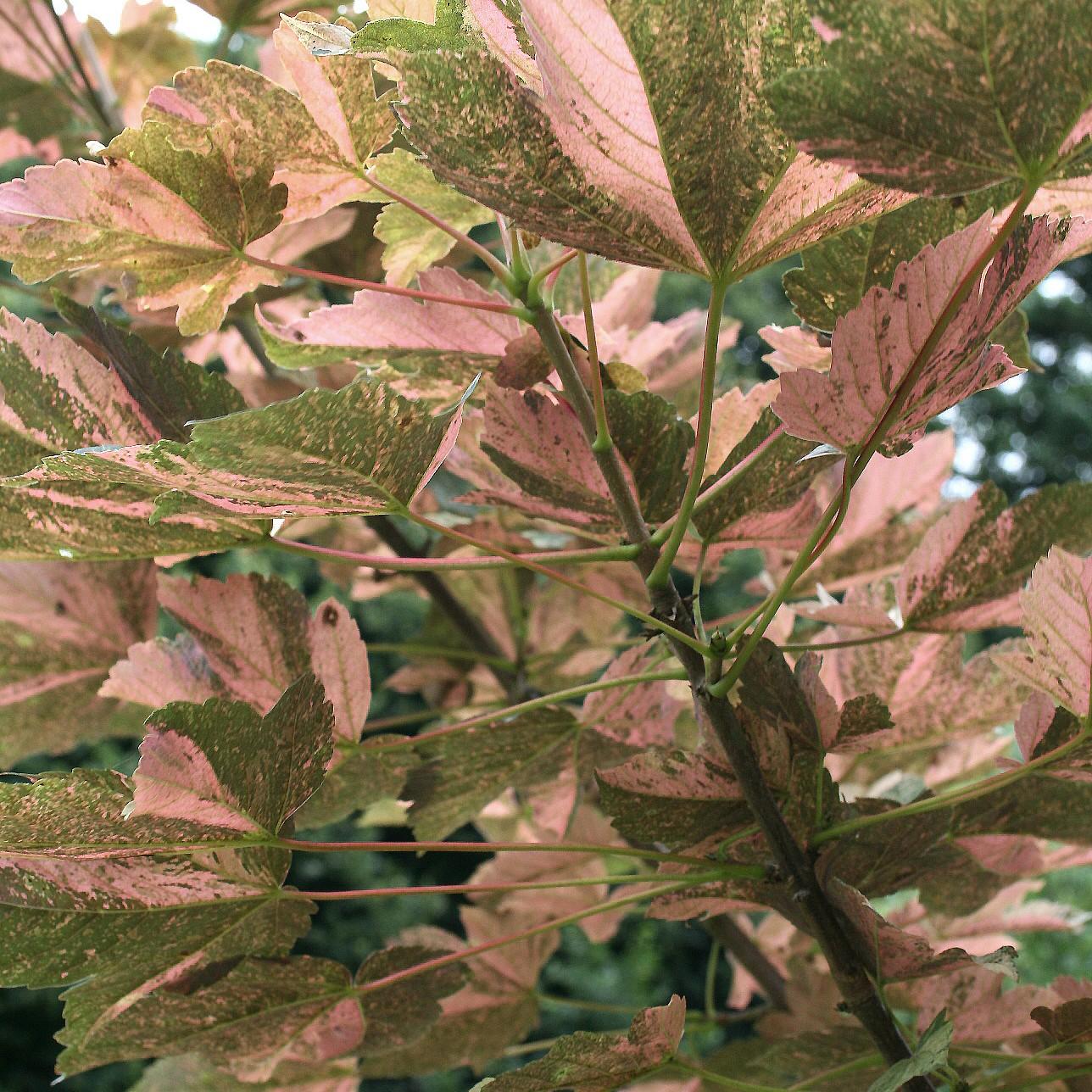
Acer pseudoplatanus 'Eskimo Sunset' (sometimes shortened to 'Esk Sunset') is a variegated deciduous sycamore maple cultivar prized for its tri-color foliage that shifts from pink-blushed new growth to cream, green, and deep purple tones through the growing season. It is a flowering, pet-safe outdoor tree that thrives in full sun and high-humidity environments. First, confirm its identity by running a photo of your tree through the Sproutly app to rule out similar variegated maple cultivars before planting.
New growth emerges in early spring with soft pink edges that fade to creamy white as the leaves mature, while the center of each leaf deepens to a rich green with purple undersides. In fall, the foliage shifts to warm golden and bronze tones before dropping for the winter. Unlike many variegated maple cultivars, it retains its color consistency even in full sun, with minimal risk of leaf scorch when watered appropriately during dry spells. It is categorized as a Eskimo Sunset Sycamore Maple in the Sproutly plant encyclopedia, with verified care data tailored to its specific growth needs.
USDA Hardiness Zones for Acer Pseudoplatanus Eskimo Sunset
Acer pseudoplatanus Eskimo Sunset grows reliably in USDA hardiness zones 5 through 8, where minimum winter temperatures range from -20°F to 20°F (-28.9°C to -6.7°C). To confirm if your region falls in these zones, use the official USDA Agricultural Research Service zone lookup tool by entering your zip code. For zone 5 gardeners, add a 3-inch layer of wood chip mulch around the base of the tree in late fall to insulate roots from extreme cold snaps.
In zone 5, avoid planting in exposed, wind-prone locations, as harsh winter winds can damage young branch tips. In zone 8, provide afternoon shade during the hottest summer months to reduce stress on the foliage, as extended temperatures above 95°F may cause temporary leaf edge browning. The cultivar cannot tolerate consistent winter temperatures below -20°F, so it is not suitable for planting in zones 4 or colder without permanent winter protection that covers the entire tree structure.
Mature Size and Growth Characteristics
Mature Acer pseudoplatanus Eskimo Sunset trees reach 30 to 40 feet tall and 20 to 30 feet wide at full growth, with a rounded, moderately dense canopy. It grows at a slow to moderate rate of 12 to 24 inches per year, so it will take 15 to 20 years to reach its full mature height. Its leaves are 4 to 6 inches wide with the classic 5-lobed sycamore maple shape, and it produces small, greenish-yellow hanging flower clusters in early spring before new foliage fully unfurls.
The flower clusters are 3 to 5 inches long and attract native pollinators including bumblebees and solitary bees in early spring, when food sources are limited. After pollination, the tree produces small, paired winged samaras (the typical "helicopter" seeds of maple trees) that ripen in late summer and drop in early fall. The bark is smooth and gray on young trees, developing shallow, flaky ridges as it matures, adding winter interest to the landscape after leaves have dropped.
Ideal Planting Conditions for Acer Pseudoplatanus Eskimo Sunset
Plant Acer pseudoplatanus Eskimo Sunset in a location that receives 6+ hours of direct full sun per day, in well-draining loamy or sandy soil with a pH between 5.5 and 7.5. Avoid planting in low-lying areas where water pools after rain, as this can cause root rot in the cultivar. Dig a planting hole twice as wide as the root ball and the same depth, then backfill with native soil mixed with 1 part compost to improve drainage and nutrient content.
If you are planting a container-grown tree, gently loosen the outer roots of the root ball before placing it in the hole to encourage outward root growth. Do not amend the backfill soil with more than 25% compost, as excessive nutrient content can cause roots to stay confined to the planting hole instead of spreading into the surrounding native soil. After planting, water thoroughly to settle the soil, and add a 2-inch layer of wood chip mulch around the base, keeping the mulch 6 inches away from the trunk to prevent rot.
Ongoing Care Routine for Acer Pseudoplatanus Eskimo Sunset
Water newly planted Acer pseudoplatanus Eskimo Sunset trees 1 to 2 times per week for the first growing season, providing 1 inch of water each time to keep the top 6 inches of soil consistently moist but not soggy. Once established, water only during 2+ week periods of no rain, as the cultivar has moderate drought tolerance. Apply a balanced, slow-release 10-10-10 fertilizer once per year in early spring before new growth emerges, and prune only dead or damaged branches in late winter while the tree is dormant. Log your care schedule in the Sproutly app to get custom reminders tailored to your local weather conditions.
Avoid over-fertilizing, as excess nitrogen can cause the tree to produce solid green leaves instead of its characteristic variegated foliage. Do not prune more than 10% of the tree’s live branches in a single year, as this can stress the slow-growing cultivar and reduce foliage production the following season. If you notice a significant reduction in variegation, check the tree’s sun exposure: less than 6 hours of direct sun per day will cause the foliage to revert to mostly green over time.
Common Pests and Problems to Watch For
Acer pseudoplatanus Eskimo Sunset is relatively disease-resistant, but it may attract aphids, scale insects, and powdery mildew in high-humidity conditions with poor air circulation. Aphid infestations appear as clusters of small green or black bugs on the undersides of leaves, and can be treated with a direct spray of neem oil applied every 7 to 10 days until the infestation clears. If you notice yellowing or browning leaf edges not caused by drought, test your soil pH to rule out alkaline soil, which can cause nutrient deficiencies in the cultivar.
Scale insects appear as small, brown, immobile bumps on branch stems and the undersides of leaves, and secrete a sticky honeydew that can attract sooty mold. Treat small scale infestations by scraping the bumps off with a soft brush, or apply horticultural oil during the dormant season to smother overwintering scale eggs. Powdery mildew appears as a white, powdery coating on leaf surfaces, and can be prevented by planting the tree in a location with good air flow, and avoiding overhead watering that keeps leaf surfaces wet for extended periods.
How Acer Pseudoplatanus Eskimo Sunset Compares to Similar Maple Cultivars
Acer pseudoplatanus Eskimo Sunset is often confused with other variegated or sunset-named maple cultivars, but it has distinct traits that set it apart. Unlike the smaller Oregon Sunset Japanese Maple, it grows to twice the height and has broader, thicker leaves. It differs from the Nizetii Sycamore Maple by its consistent pink new growth, which Nizetii lacks. Use the Sproutly plant identification tool to compare photos of your tree to verified cultivar entries if you are unsure of your maple’s type.
It is also often mixed up with Red Sunset® Red Maple, which has solid green leaves during the growing season and bright red fall foliage, instead of the tri-color variegation present on Acer pseudoplatanus Eskimo Sunset throughout the year. The table below summarizes key differences between these common lookalike cultivars:
| Cultivar | Mature Height | Foliage Traits | Cold Hardiness |
|---|---|---|---|
| Acer pseudoplatanus Eskimo Sunset | 30-40 feet | Tri-color pink, cream, and green variegation in spring; bronze fall color | Zones 5-8 |
| Oregon Sunset Japanese Maple | 15-20 feet | Solid green spring foliage, orange-red fall color | Zones 5-9 |
| Nizetii Sycamore Maple | 30-40 feet | Cream and green variegation, no pink new growth | Zones 4-7 |
| Red Sunset® Red Maple | 40-50 feet | Solid green spring foliage, bright red fall color | Zones 4-8 |
Landscaping Uses for Acer Pseudoplatanus Eskimo Sunset
Acer pseudoplatanus Eskimo Sunset works well as a standalone specimen tree in front or back yards, where its colorful foliage can be viewed from multiple angles, or as a shade tree for patio areas. Its mature size makes it unsuitable for small planting strips under power lines, so allow at least 15 feet of space between the planting site and any structures or overhead utility lines. It is also pet-safe, so it is a good choice for yards where dogs or cats spend unsupervised time outdoors.
Its dense canopy provides dappled shade that is ideal for underplanting with shade-tolerant perennials such as hostas, ferns, or coral bells. Avoid planting under the tree with shallow-rooted groundcovers that will compete for water and nutrients, as the tree’s root system spreads close to the soil surface in the first 10 years of growth. It also works well in mixed border plantings with evergreen shrubs, where its seasonal color changes provide year-round visual interest against a neutral green backdrop.
Frequently Asked Questions About Acer Pseudoplatanus Eskimo Sunset
What USDA zones does Acer pseudoplatanus Eskimo Sunset grow in?
Acer pseudoplatanus Eskimo Sunset is hardy in USDA zones 5 through 8, where minimum winter temperatures range from -20°F to 20°F (-28.9°C to -6.7°C).
How big does Acer pseudoplatanus Eskimo Sunset get?
At full maturity, Acer pseudoplatanus Eskimo Sunset reaches 30 to 40 feet tall and 20 to 30 feet wide, with a rounded canopy.
Is Acer pseudoplatanus Eskimo Sunset pet-safe?
Yes, Acer pseudoplatanus Eskimo Sunset is classified as pet-safe, so it is non-toxic to dogs and cats if ingested.
How much sun does Acer pseudoplatanus Eskimo Sunset need?
Acer pseudoplatanus Eskimo Sunset requires 6+ hours of direct full sun per day to maintain its vibrant variegated foliage color.
Does Acer pseudoplatanus Eskimo Sunset produce flowers?
Yes, it produces small, greenish-yellow hanging flower clusters in early spring before new foliage fully emerges.
Get Personalized Care for Your Acer Pseudoplatanus Eskimo Sunset
If you need help confirming your tree’s identity, troubleshooting leaf discoloration, or creating a custom care schedule, the Sproutly app can help. Upload a clear photo of your Acer pseudoplatanus Eskimo Sunset’s foliage to get an instant identification, plus care reminders and problem-solving tips tailored to your specific plant and local climate. You can save your tree to your personal plant list in the app to track its growth and care over time.
Try Sproutly today to simplify care for your Acer pseudoplatanus Eskimo Sunset and all other plants in your landscape.
Letture correlate
Altre guide che potrebbero piacerti
Amaranth: Types, Growing Tips, Edible Uses, and Care Guide
Learn all about amaranth, a versatile warm-season plant grown for nutrient-dense grains, edible greens, and ornamental blooms, plus care and cultivation tips.
2026-07-12 · 8 min read
Monstera Watering 101: A Simple Guide for Healthy, Happy Plants
Learn exactly how to water monstera (including monstera deliciosa) to avoid overwatering, fix dry leaves, and keep your plant thriving year-round.
2026-07-11 · 9 min read
Emerald Queen Maple: Full Care, Growth, and Identification Guide
Learn how to grow and care for an emerald queen maple, including sun requirements, watering schedules, and common issues for this popular Norway maple cultivar.
2026-07-09 · 13 min read