Crocus chrysanthus: Complete Care, Cultivars, and Growing Guide
Learn all about Crocus chrysanthus, the early-blooming snow crocus, including care tips, popular cultivars, and how to grow these pet-safe spring flowers.
Crocus chrysanthus: Complete Care, Cultivars, and Growing Guide
Crocus chrysanthus, or snow crocus, is a small, early-blooming bulbous perennial native to Southern and Central Europe. It pushes through melting snow in late winter to early spring, blooms 2–4 weeks earlier than larger Dutch crocus, and is non-toxic to pets and humans.
What is Crocus chrysanthus?
Crocus chrysanthus, commonly called snow crocus, is a small, early-blooming bulbous perennial native to Southern and Central Europe. It is one of the first flowers to emerge as snow melts in late winter or early spring, often blooming 2 to 4 weeks earlier than larger Dutch crocus varieties. You can find more core details about this species in our full Snow crocus plant profile.
Key physical characteristics
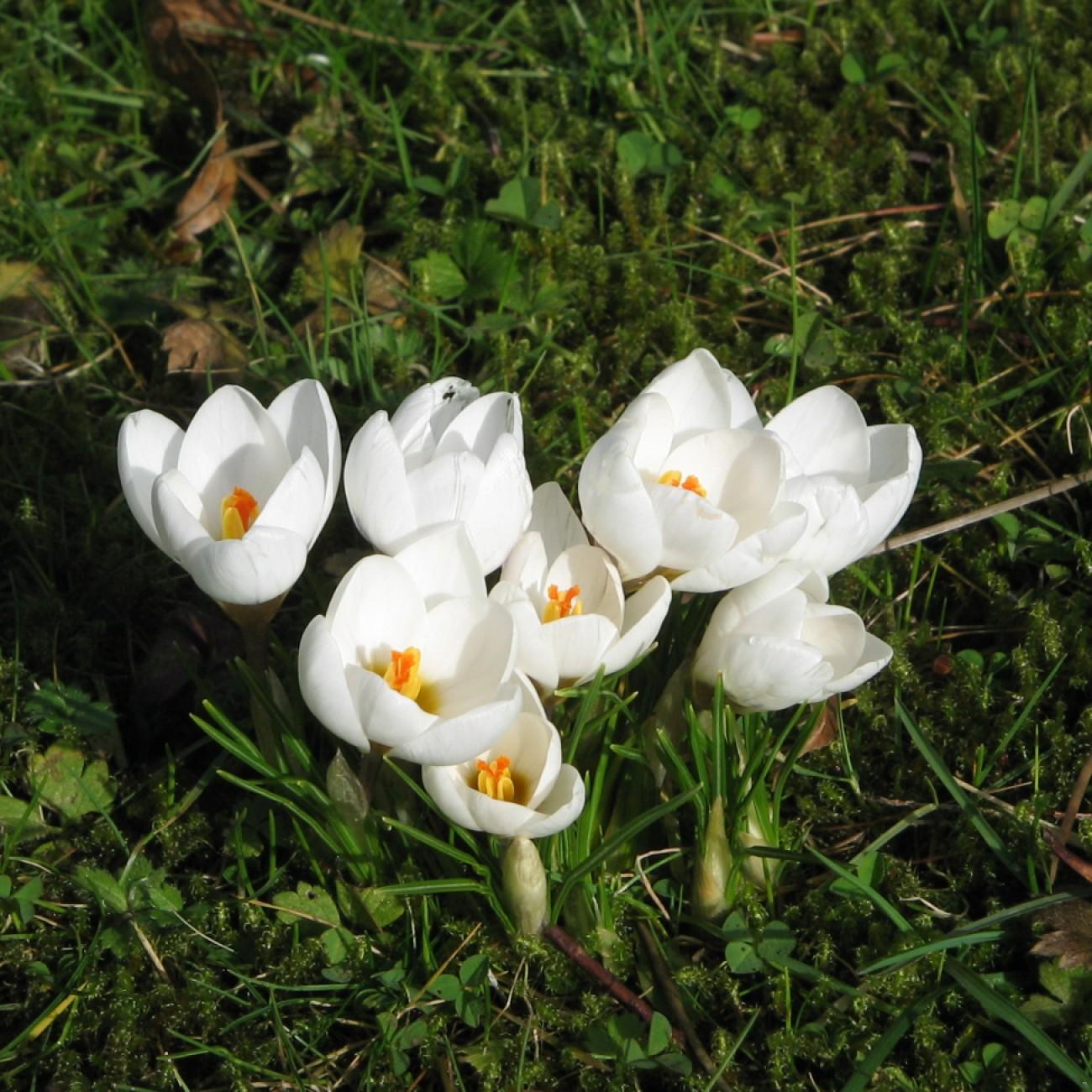
Mature Crocus chrysanthus plants reach 3 to 4 inches tall at full bloom, with narrow, grass-like green foliage that has a distinctive central white stripe. Each bulb produces 1 to 3 flowers that are 1 to 2 inches wide, with six pointed tepals that open wide on sunny days and close tightly during cold snaps or overcast weather. Wild-type blooms are bright golden yellow, while cultivated varieties come in white, cream, purple, and bicolor patterns.
Native range and natural habitat
Crocus chrysanthus grows natively across mountainous regions of the Balkans, Turkey, and parts of Central Europe, where it thrives in rocky, well-draining meadows and open woodland slopes. It is adapted to cold winter temperatures, frequent freeze-thaw cycles, and full sun exposure in early spring before surrounding deciduous trees leaf out.
Etymology of Crocus chrysanthus
The genus name Crocus derives from the Greek word krokos, referring to the saffron crocus and its vivid orange stigmas. The species epithet chrysanthus comes from the Greek chrysos (gold) and anthos (flower), referencing the bright golden blooms of the wild type variety. This naming convention aligns with standard taxonomic practices for other crocus species, which often use species epithets to describe flower color or form.
Popular Crocus chrysanthus Cultivars
Dozens of cultivated varieties of Crocus chrysanthus exist, with flower colors ranging from pure white to deep purple, many with contrasting streaks or centers. Two of the most widely available cultivars are 'Goldilocks' and 'Snowbunting'. Most cultivars retain the species’ early bloom time, cold hardiness, and low-maintenance growth habits.
Crocus chrysanthus 'Goldilocks'
This cultivar produces bicolor golden-yellow blooms with subtle bronze streaks on the outer tepals, creating a warm, two-toned effect when open. It grows 3 to 4 inches tall, is pet-safe, and blooms reliably even in areas with frequent late-winter snowfall. Full growing details are available in the Crocus chrysanthus 'Goldilocks' profile.
Crocus chrysanthus 'Snowbunting'
'Snowbunting' has pure white blooms with bright yellow throats and faint purple feathering on the outer tepals. It is one of the earliest-blooming Crocus chrysanthus cultivars, often emerging as soon as the top layer of snow begins to melt in late February or early March in USDA zones 5 to 7.
Other notable cultivars
- 'Advance': Soft yellow blooms with deep purple outer tepals
- 'Blue Pearl': Pale lavender-blue flowers with yellow centers
- 'Zwanenburg Bronze': Rich golden-orange blooms with bronze-purple outer streaks
- 'Lady Killer': White inner tepals with bold dark purple outer markings
Crocus chrysanthus vs. Autumn Crocus: Key Differences
Crocus chrysanthus is often confused with autumn crocus (Colchicum autumnale), but the two are unrelated species with critical safety differences. Crocus chrysanthus is non-toxic and pet-safe, while all parts of Colchicum autumnale contain colchicine, a toxic compound dangerous to humans, dogs, and cats if ingested. You can learn more about the toxic species in our Autumn crocus (Colchicum autumnale) profile.
Bloom timing differences
Crocus chrysanthus blooms in late winter to early spring, between February and April in most temperate regions. Autumn crocus blooms in late summer to early fall, between August and October, and produces no foliage during its bloom period, while Crocus chrysanthus blooms alongside its green, grass-like leaves.
Safety and toxicity comparison
All parts of Crocus chrysanthus are non-toxic to dogs, cats, horses, and humans, making it safe to plant in yards accessible to pets or small children. Autumn crocus contains high concentrations of colchicine, a compound that causes vomiting, diarrhea, organ damage, and even death if ingested in large enough quantities. Even small amounts of autumn crocus foliage or flowers can cause severe illness in pets.
How to identify each species
Crocus chrysanthus has three stamens per flower and narrow, grass-like foliage that emerges at the same time as blooms. Autumn crocus has six stamens per flower, wider, broader leaves that emerge in spring (and die back before blooms appear in fall), and larger, wider flowers that often reach 3 to 4 inches across, compared to the 1 to 2 inch blooms of Crocus chrysanthus.
Crocus chrysanthus Care Requirements
Crocus chrysanthus is a low-maintenance, beginner-friendly plant that thrives in full sun and well-draining soil. It requires minimal intervention once established, making it ideal for gardeners new to growing spring bulbs. It is hardy in USDA zones 3 through 8, and tolerates a wide range of winter temperature fluctuations.
Light and temperature needs
Crocus chrysanthus requires 6 to 8 hours of direct sun per day during its active growth period in late winter and early spring. It tolerates temperatures as low as -30°F (-34°C) when dormant, and actively grows and blooms when temperatures range between 35°F (1°C) and 65°F (18°C). It can survive temporary freezes down to 20°F (-7°C) while in bloom, with flowers reopening once temperatures rise above freezing.
Watering schedule and humidity preferences
Crocus chrysanthus needs consistent moisture during its fall root development period and spring active growth period, requiring roughly 1 inch of water per week from rain or supplemental watering. It is drought-tolerant once it goes dormant in late spring, and requires no watering during summer months. It prefers moderate to high humidity levels between 40% and 70% during its growth period, which is typical of late winter and early spring conditions in most temperate regions.
Soil and fertilizer requirements
Crocus chrysanthus grows best in sandy, loamy, well-draining soil with a pH between 6.0 and 7.0. It will rot quickly if planted in heavy clay soil that stays saturated for more than 24 hours after rain or watering. It does not require regular fertilization; a single application of bulb fertilizer or bone meal worked into the soil at planting time is sufficient for the first 2 to 3 years of growth. Established clumps only need a light top-dressing of compost in early fall once every 3 years.
Pruning and post-bloom care
Do not remove Crocus chrysanthus foliage until it has turned completely yellow and died back naturally, which occurs 4 to 6 weeks after blooming ends. The foliage photosynthesizes during this period to store energy in the bulb for the following year’s blooms. You can snip off spent flower stalks after blooming if desired for a neater appearance, but this is not required for plant health.
How to Plant Crocus chrysanthus Bulbs
Crocus chrysanthus bulbs should be planted in early fall, 3 to 4 inches deep and 2 to 3 inches apart, with the pointed end facing up. They perform best when planted in groups of 10 or more for a dense, colorful display. Bulbs are often sold in mixed cultivar packs for a varied range of bloom colors.
Best planting time by region
- USDA zones 3 to 5: Plant bulbs in late August to early September, before the first hard frost
- USDA zones 6 to 7: Plant bulbs in mid-September to early October
- USDA zones 8: Plant bulbs in late October to early November, after soil temperatures have cooled below 60°F (15°C) Bulbs require 12 to 15 weeks of cold stratification at temperatures between 35°F (1°C) and 45°F (7°C) to bloom successfully in spring.
Planting in lawns, borders, and containers
- Lawns: Plant bulbs in scattered drifts 3 to 4 inches deep, and delay mowing the area until foliage dies back completely in late spring to avoid removing leaves before they finish storing energy.
- Borders and rock gardens: Plant bulbs in the front of beds, where their small blooms will be visible early in the season before taller perennials emerge.
- Containers: Use a well-draining potting mix with added perlite or sand, and ensure pots have drainage holes. Plant bulbs 2 inches apart, and water thoroughly after planting. In zones 3 and 4, move containers to an unheated garage or sheltered area during extreme cold snaps to prevent bulb damage.
Post-planting care steps
Water bulbs thoroughly immediately after planting to settle soil around the roots and trigger root development. Apply a 2-inch layer of mulch over the planting area in late fall to insulate bulbs from extreme temperature fluctuations and reduce weed growth. Remove half the mulch in early spring once snow begins to melt to allow shoots to emerge easily.
Common Pests and Problems Affecting Crocus chrysanthus
Crocus chrysanthus has few serious pest or disease issues, though squirrels and voles may dig up and eat newly planted bulbs. Fungal rot can occur if bulbs are planted in poorly draining soil that stays saturated for long periods. Most issues can be prevented with proper site selection and minimal proactive care.
Pest prevention tips
- To deter squirrels from digging up newly planted bulbs, cover the planting area with a layer of chicken wire or hardware cloth for the first 4 to 6 weeks after planting, or dust bulbs with cayenne pepper before planting.
- To control voles, plant bulbs in wire mesh baskets buried in the soil, or place castor oil granules around the planting area to repel the rodents.
- Aphids may occasionally feed on new foliage in early spring; spray affected plants with a strong stream of water to remove them, or use insecticidal soap for severe infestations.
Disease identification and treatment
- Bulb rot: Caused by fungal pathogens in saturated soil, bulb rot leads to soft, mushy bulbs and stunted or failed growth in spring. Prevent rot by planting in well-draining soil, and avoid overwatering. Discard any bulbs that feel soft or show signs of mold before planting.
- Botrytis blight: A gray mold that affects foliage and flowers during prolonged cool, wet periods, causing brown, water-soaked spots. Remove affected plant material immediately, and avoid overhead watering to reduce spread. Severe infestations can be treated with a copper-based fungicide.
How to encourage repeat blooms year after year
Leave foliage in place until it dies back completely after blooming to allow bulbs to store enough energy for the following year. Avoid mowing or cutting foliage early, even if it looks untidy. Divide overcrowded clumps every 4 to 5 years in late summer, when bulbs are dormant, to maintain consistent bloom production. Replant divided bulbs immediately at the recommended depth and spacing.
Garden Design Ideas for Crocus chrysanthus
Crocus chrysanthus’s small size and early bloom time make it versatile for a range of garden designs. It works well planted en masse in lawns, along walkway edges, in rock gardens, or under deciduous trees that leaf out after the crocus has finished blooming for the season. Its low height makes it suitable for even small garden spaces and container displays.
Best companion plants for Crocus chrysanthus
Pair Crocus chrysanthus with other early-blooming, low-growing perennials and bulbs that have similar sun and soil requirements, including:
- Snowdrops (Galanthus nivalis), which bloom at the same time and thrive in the same conditions
- Winter aconite (Eranthis hyemalis), a low-growing yellow flower that complements crocus blooms
- Early-blooming grape hyacinth (Muscari armeniacum), which adds contrast with deep blue blooms
- Hellebores (Helleborus orientalis), which have taller, evergreen foliage that provides a backdrop for small crocus blooms
Planting combinations for extended spring color
For a continuous sequence of spring color, plant Crocus chrysanthus in layers with later-blooming bulbs:
- Plant Crocus chrysanthus 3 to 4 inches deep at the top layer of a bulb bed, followed by larger Dutch crocus planted 5 inches deep, then daffodils planted 6 to 8 inches deep. This creates a layered display that blooms in succession from late winter through mid-spring, without requiring additional space.
- Pair white and purple Crocus chrysanthus cultivars with bright yellow winter aconite for a high-contrast early spring display that stands out against melting snow.
Frequently Asked Questions About Crocus chrysanthus
Is Crocus chrysanthus pet-safe?
Yes, Crocus chrysanthus (snow crocus) is non-toxic to dogs, cats, and horses. It is important to distinguish it from toxic autumn crocus (Colchicum autumnale), which is a different, unrelated species that can cause serious illness if ingested by pets or humans.
When does Crocus chrysanthus bloom?
Crocus chrysanthus blooms in late winter to very early spring, often pushing through remaining snow cover. It typically blooms 2 to 4 weeks earlier than larger Dutch crocus varieties, making it one of the first flowering plants to emerge each year.
How deep should I plant Crocus chrysanthus bulbs?
Plant Crocus chrysanthus bulbs 3 to 4 inches deep, measured from the base of the bulb to the soil surface. Space bulbs 2 to 3 inches apart, and plant in groups of 10 or more for the most visual impact.
Can Crocus chrysanthus grow in containers?
Yes, Crocus chrysanthus grows well in containers as long as the pot has drainage holes and uses well-draining potting mix. Container-grown bulbs may need protection from extreme cold in zones 3 and 4 to prevent frost damage.
Do Crocus chrysanthus bulbs multiply?
Yes, established Crocus chrysanthus bulbs will naturalize and multiply over time, forming larger clumps of blooms each year. Leave the foliage in place until it dies back naturally after blooming to give the bulbs energy to multiply for the next season.
Identify Crocus Varieties With Sproutly
If you’re unsure if the early spring blooms in your garden are Crocus chrysanthus or a lookalike species, the Sproutly app can help. Snap a photo of the plant for fast identification, plus customized care tips tailored to your specific growing conditions. The app can also distinguish between non-toxic snow crocus and toxic autumn crocus, so you can plant with confidence if you have pets or small children.
Try Sproutly today to identify plants, track care schedules, and grow your garden with confidence.
Lecturas relacionadas
Más guías que podrían interesarte
Norway Spruce: Identification, Care, Cultivars, and Uses
Learn all about Norway spruce (Picea abies), including its growth habits, popular cultivars, planting guidelines, care requirements, and common uses for landscapes.
2026-07-06 · 11 min read
China Aster: Complete Care, Growing Guide, and Varieties
Learn how to grow and care for China aster (Callistephus chinensis), a pet-safe, full-sun flower that delivers long-lasting garden color for months.
2026-07-04 · 17 min read
Chinese Evergreen: Care Guide, Varieties, and Growing Tips for Aglaonema
Learn how to care for Chinese evergreen (Aglaonema) houseplants, plus top varieties, troubleshooting tips, and pet safety details for this low-fuss indoor plant.
2026-07-04 · 14 min read