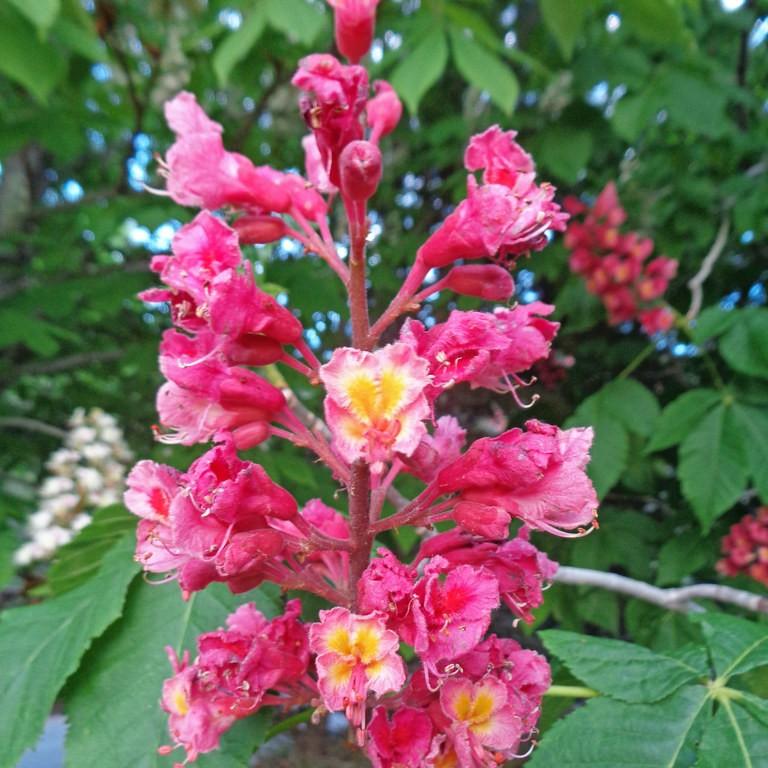
red horse chestnut
Aesculus carnea 'Briotii'
Overview
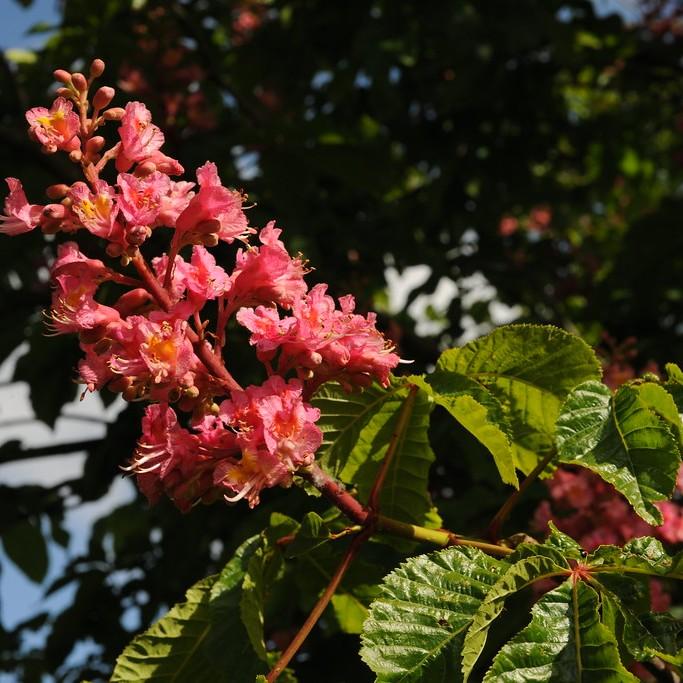
The Red Horse Chestnut (Aesculus carnea 'Briotii') is a stunning shrub to behold in any landscape. It is incredibly reliable and hardy, able to tolerate a wide range of weather conditions and soil types. In spring and early summer, the shrub is adorned with clusters of striking red blossoms, adding a vibrant display to any garden. Growing to a height of up to 10 feet, this might be a smaller variety than the common Horse Chestnut, but the deep red color sets it apart and makes it more eye-catching. It is an amazing addition to any garden and a great way to add a bold pop of color year-round.
Care Guide
Watering
This plant species should be watered once to twice a week, depending on the season and soil conditions. During warmer months, you should water the Red Horse Chestnut deeply, allowing its roots to access at least 2 inches of water every week. During cooler months, water it less frequently, but keep an eye on the soil to ensure it does not become overly dry. Additionally, avoid over-watering, as this can cause the roots of the plant to rot and will damage the plant's health.
Light
The red horse chestnut (Aesculus carnea 'Briotii') is a medium-sized tree that prefers full sun and well-drained soil to thrive. It prefers 6-8 hours of sunlight per day, with afternoon shade in hotter climates. During the winter months, the tree can tolerate some shade, but it is important to give it some direct sun to help it stay healthy. In summer months, when most of the country is in full swing of hot days, you can adjust the light accordingly by moving the tree to a shadier spot until the days become cooler. This will help the tree from getting burnt leaves.
Temperature
Hardiness zone 5–8.
Pruning
Red Horse Chestnut trees should be pruned in late winter when the plant is in a dormant state. Prune severely, removing up to 1/3 of the overall size. This will help to keep the tree at a manageable height and keep the canopy open. Make sure to remove any branches that are dead, diseased, or growing toward the interior of the canopy. Also remove any weak, competing, or narrow-angled branches. After the initial pruning, follow up with light pruning during the summer months, to encourage healthy growth.
Propagation
Grafting Propagation, Cutting, Layering Propagation, Seed Propagation, Air Layering Propagation, Tissue Culture
Related plants
Other plants you might like if you grow red horse chestnut.