Henna
Lawsonia inermis
Overview
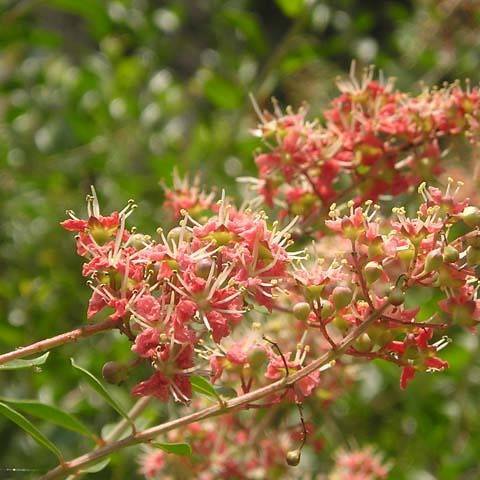
Henna is a branching, spiny shrub with small, opposite, elliptical green leaves and dense clusters of fragrant white or pale pink four-petaled flowers. It thrives in hot, arid climates, and its leaves contain lawsone, a naphthoquinone compound that binds to keratin to create a long-lasting stain. Cultivated for thousands of years across its native range, it has deep cultural, medicinal, and cosmetic significance in many African, Middle Eastern, and South Asian traditions.
Care Guide
Watering
Henna is drought-tolerant once established, requiring deep, infrequent watering when the top 2 to 3 inches of soil are completely dry. Overwatering is a common issue, as it can lead to root rot, so avoid letting the plant sit in standing water, and reduce watering significantly during the cool winter dormant period. For container-grown plants, ensure pots have ample drainage holes to prevent moisture buildup around the root system.
Light
Henna requires full, direct sunlight for a minimum of 6 to 8 hours per day to thrive and produce high concentrations of the dye compound lawsone in its leaves. It can tolerate partial shade, but growth will be slower, and leaf dye content will be significantly reduced, making the plant less useful for traditional uses. When grown indoors, place it in a south-facing window or supplement with grow lights to meet its high light requirement.
Soil
Henna prefers well-draining, sandy or loamy soil with a neutral to slightly alkaline pH between 6.5 and 8.0. Heavy, clay-rich soils that retain moisture are unsuitable, as they increase the risk of root rot; amend dense soils with sand, perlite, or crushed limestone to improve drainage and adjust pH if needed. For container cultivation, use a cactus or succulent potting mix blended with extra perlite to ensure proper aeration and drainage.
Fertilizer
Henna is a light feeder that benefits from a balanced, slow-release 10-10-10 fertilizer applied once in early spring and once in mid-summer to support active growth. Avoid over-fertilizing, as excess nitrogen will promote soft, leafy growth with reduced lawsone content, making the leaves less effective for dye production. Do not fertilize during the winter dormant period, when the plant’s growth slows and nutrient needs are minimal.
Temperature
Henna thrives in warm temperatures between 68°F and 95°F (20°C and 35°C), and it cannot tolerate frost or prolonged temperatures below 50°F (10°C). If exposed to freezing temperatures, the above-ground foliage will die back, though established plants may regrow from the root system if the cold exposure is brief. In regions with cold winters, grow henna in containers that can be moved indoors to a warm, sunny location during the cooler months.
Pruning
Prune henna annually in late winter or early spring before new growth emerges to shape the plant, remove dead or damaged branches, and encourage bushier, more compact growth. Regular harvesting of mature leaves for dye use also acts as a natural pruning method, stimulating the production of new, tender leaves that have a higher lawsone concentration than older foliage. For container-grown plants, prune back long, leggy branches to keep the plant at a manageable size and prevent it from becoming top-heavy.
Propagation
Henna is most commonly propagated from semi-hardwood cuttings taken in late spring or early summer, as cuttings root reliably and produce plants identical to the parent with consistent dye properties. Take 4 to 6 inch cuttings from healthy, mature branches, remove the lower leaves, dip the cut end in rooting hormone, and plant in well-draining sandy medium, keeping it moist but not waterlogged until roots develop in 4 to 6 weeks. It can also be grown from seed, but seeds have a low germination rate, and seed-grown plants may have variable dye content, making this method less popular for commercial or dye-focused cultivation.
Humidity
Henna is adapted to arid and semi-arid climates, tolerating low humidity levels between 30% and 50% very well. It does not require high humidity, and excess humidity in cool conditions can increase the risk of fungal leaf spots and root rot, making it unsuitable for overly humid, poorly ventilated growing spaces. For indoor-grown plants, avoid placing it near humidifiers or in steamy rooms like bathrooms, and ensure there is adequate air circulation around the foliage to prevent moisture buildup.
Repotting
Container-grown henna should be repotted every 2 to 3 years in early spring, before active new growth begins, to refresh the soil and provide extra room for root expansion. Choose a pot that is only 1 to 2 inches larger in diameter than the current pot, as overly large pots hold excess moisture that can lead to root rot. When repotting, gently loosen the root ball, remove any dead or rotting roots, and replant in fresh, well-draining cactus or succulent mix, watering lightly after repotting to settle the soil around the roots.
Uses & Symbolism
Henna is most widely known for its cosmetic use, as ground dried leaves mixed into a paste create a temporary red-orange stain used for traditional body art (mehndi) for weddings, festivals, and cultural celebrations, as well as natural hair and nail coloring. It has a long history of use in traditional medicine, with leaves applied topically to soothe burns, reduce inflammation, and treat fungal infections, and it is also used as a natural dye for textiles, leather, and wool. In some regions, the fragrant flowers are used to make perfumes and essential oils, and the dense, spiny shrub is sometimes planted as a drought-tolerant hedge or ornamental for its fragrant blooms.
Diseases & Pests
Henna is relatively pest-resistant, but it can be affected by common sap-sucking insects including aphids, spider mites, and whiteflies, which feed on the sap of young leaves and stems, causing yellowing, stunted growth, and reduced leaf quality; these pests can be controlled with insecticidal soap or neem oil applications. Overwatering or poorly draining soil frequently leads to root rot, a fungal infection that causes wilting, yellowing leaves, and eventual plant death if not addressed by reducing watering and repotting in fresh, dry soil. In high-humidity conditions, henna may develop fungal leaf spots, which appear as small brown or black lesions on foliage; improve air circulation around the plant, avoid wetting the leaves when watering, and remove affected foliage to prevent the spread of the fungus.
Related plants
Other plants you might like if you grow Henna.