Bottle Gourd
Lagenaria siceraria
Overview
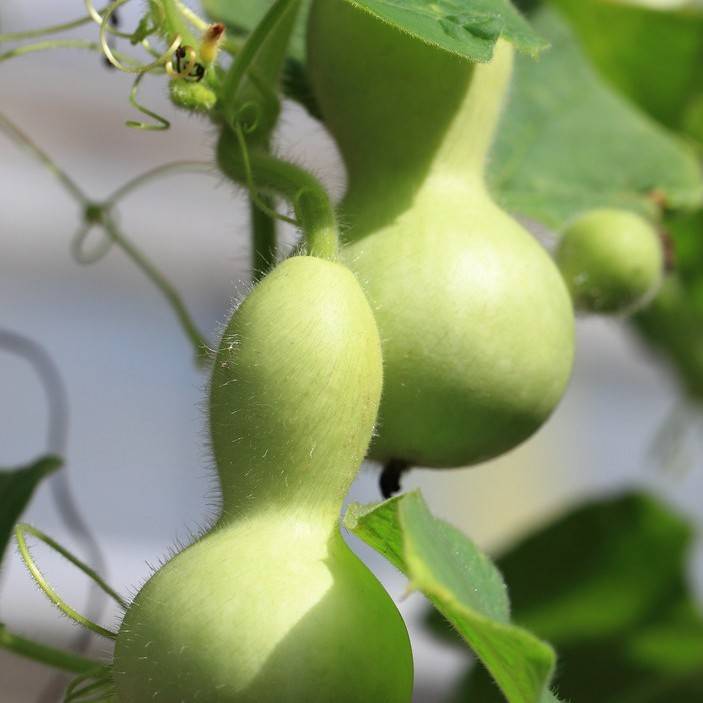
Bottle gourd is a warm-season vining plant in the cucumber and squash family, recognizable by its large, fuzzy heart-shaped leaves, fragrant white night-blooming flowers, and variable fruit shapes that range from rounded to long, slender, or distinctly bottle-like. While young, tender fruits are harvested as a nutritious vegetable across South Asia, Southeast Asia, and Africa, fully mature fruits develop a tough, waterproof woody shell that has been used for millennia to make utensils, storage containers, musical instruments, and decorative crafts. The species is one of the oldest domesticated plants, with archaeological evidence of use dating back over 10,000 years.
Care Guide
Watering
Water bottle gourd deeply and regularly, keeping the top 1-2 inches of soil consistently moist but not waterlogged, especially during fruit development. Reduce watering frequency once fruits reach full size and begin to mature, to encourage hardening of the outer shell. Avoid overhead watering to minimize fungal leaf disease risk, directing water at the base of the plant instead.
Light
Bottle gourd requires full, direct sunlight for a minimum of 6-8 hours per day to support vigorous vine growth and fruit production. Plants grown in shaded conditions will produce fewer flowers, smaller fruit, and are more susceptible to pest infestations. When grown indoors, place plants in a south-facing window or under high-output grow lights to meet light requirements.
Soil
Plant bottle gourd in loose, well-draining loamy or sandy soil rich in organic matter, with a pH range of 6.0 to 6.8 for optimal nutrient uptake. Avoid heavy, compacted clay soils that hold excess moisture, as these can cause root rot and stunted growth. Amend poor soil with well-rotted compost or aged manure prior to planting to improve fertility and drainage.
Fertilizer
Prior to planting, work a balanced, slow-release 10-10-10 fertilizer into the soil to support early vine growth. Once flowers begin to form, switch to a phosphorus and potassium-rich fertilizer, such as a 5-10-10 blend, applied every 2-3 weeks to boost fruit set and development. Avoid over-fertilizing with nitrogen, as this will promote excessive leaf growth at the expense of flowers and fruit.
Temperature
Bottle gourd thrives in warm temperatures between 70-95°F (21-35°C), and is extremely sensitive to frost, which will kill the plant instantly. Seeds will only germinate when soil temperatures are consistently above 65°F (18°C), so plant outdoors only after all risk of frost has passed. If grown in cooler climates, start seeds indoors 3-4 weeks before the last frost date to extend the growing season.
Pruning
Prune back lateral side vines once they reach 8-10 feet in length to redirect energy toward flower and fruit production, rather than excess vegetative growth. Remove any yellowed, damaged, or diseased leaves regularly to improve air circulation and reduce pest and disease risk. If trellising, pinch off the top of the main vine once it reaches the top of the support structure to encourage branching.
Propagation
Bottle gourd is most commonly propagated from seed, sown directly in warm garden soil or started in biodegradable pots to avoid root disturbance during transplanting. Sow seeds 1 inch deep, 2-3 seeds per planting hole, and thin to the strongest seedling once true leaves develop. Cuttings are rarely used for propagation, as seeds germinate reliably and produce vigorous plants quickly.
Humidity
Bottle gourd tolerates a wide range of humidity levels, from 40% to 80%, as long as air circulation around the foliage is good. High humidity combined with poor air flow increases the risk of powdery mildew and downy mildew on leaves. In very arid climates, occasional misting of the surrounding area can help support growth, but avoid wetting the leaves directly.
Repotting
If started indoors in pots, transplant bottle gourd seedlings outdoors once they have 2-3 true leaves, as they do not tolerate root bound conditions well. For container-grown specimens, use a pot at least 5 gallons in size with drainage holes, and avoid repotting once the vine has begun to spread, as root damage can stunt growth or cause fruit drop. Refresh the top 2 inches of soil with compost each growing season for perennial container plantings grown in frost-free climates.
Uses & Symbolism
Young, tender bottle gourd fruits are a common vegetable in South Asian, Southeast Asian, and African cuisines, cooked in curries, stir-fries, soups, and stews for their mild, neutral flavor and high water content. Fully mature, dried gourds are used to make functional items including water bottles, bowls, scoops, birdhouses, and musical instruments such as the Indian sitar resonator and African shekere. The plant is also grown ornamentally on trellises and arbors to provide summer shade, with its attractive foliage and unique fruit shapes adding visual interest to garden spaces.
Diseases & Pests
Bottle gourd is susceptible to common cucurbit fungal diseases including powdery mildew, downy mildew, and anthracnose, which thrive in humid, poorly ventilated conditions and can be prevented by spacing plants properly and avoiding overhead watering. Common pests include aphids, cucumber beetles, squash bugs, and fruit flies, which can be managed with neem oil sprays, insecticidal soap, or floating row covers to block access to plants. Root rot can occur in waterlogged soil, so ensure proper drainage and avoid overwatering to prevent this fatal condition.
Guides that mention Bottle Gourd
Related plants
Other plants you might like if you grow Bottle Gourd.