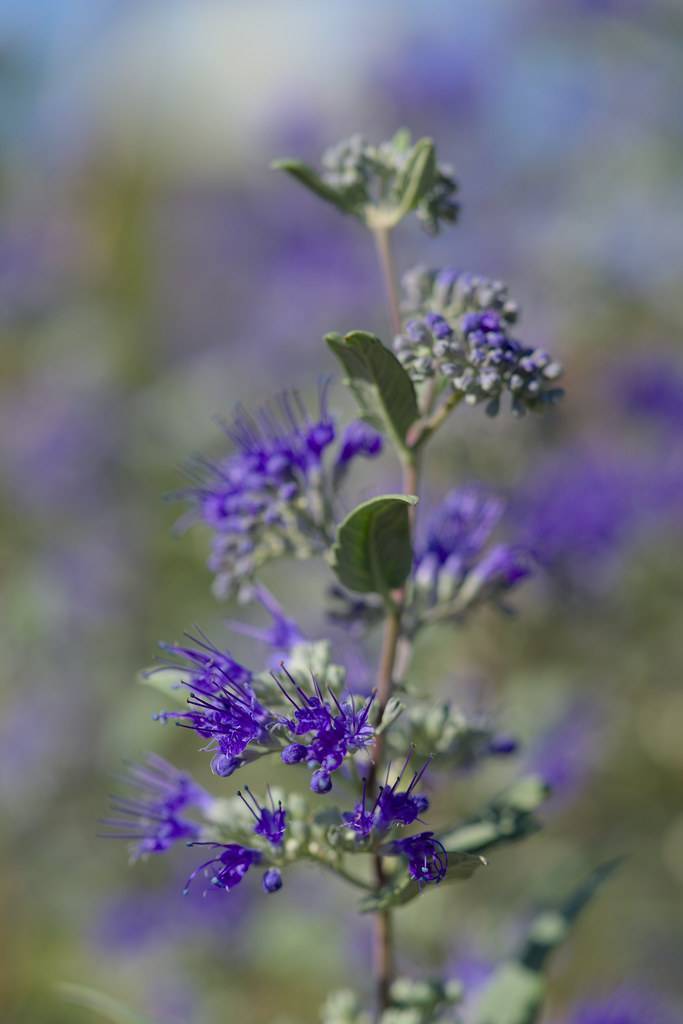
bluebeard
Caryopteris incana 'Blue Myth'
Overview
Bluebeard is an amazing plant species that will look stunning in any garden. Its intense deep blue flowers bloom from summer to fall and are a beautiful addition to create a tranquil atmosphere. Its easy-to-care-for nature makes it a perfect choice for any garden as it grows up to four feet tall. Plus, its fragrant aroma will add a nice touch to any garden. With its hardy nature and minimal pest and disease problems, Bluebeard is an easy, low-maintenance plant to have in your garden. Its adaptable nature and resilient form makes it a great choice for any garden.
Care Guide
Watering
Bluebeard (Caryopteris incana 'Blue Myth') should be watered once or twice a week, depending on the temperature and the season, and should receive approximately half an inch to an inch (1-2 cm) of water each time. During the summer months, when the temperatures are generally higher, Bluebeard may need to be watered slightly more than during the cooler months. The soil should be allowed to dry out between waterings, so it is not recommended to water this plant too frequently. When checking the soil for moisture levels, add water if it is dry 1 to 2 inches below the surface. As a general rule, it is best to water your Bluebeard in the mornings as the heat of the sun will help to dry the foliage quickly, preventing fungal and disease issues caused by moisture that has built up on the leaves.
Light
Bluebeard (Caryopteris incana 'Blue Myth') should be planted in an area that receives mainly full sun (at least 6 or more hours of direct sunlight per day). If planted in an area with partial shade, it may not bloom as profusely as it would in a location with full sun. During hot summer days, some afternoon shade may be beneficial. However, Bluebeard should receive adequate morning sun to encourage good flowering.
Temperature
Hardiness zone 5–9.
Pruning
Bluebeards (Caryopteris incana 'Blue Myth') should be pruned once a year in early spring, once new growth begins to emerge. Pruning should be done by cutting back the entire shrub by 1-third its height. This will encourage new growth and create a denser, bushier shrub. Dead, diseased, or damaged branches should also be removed. By performing this type of pruning, it will help to maintain the desired shape of the shrub and promote bushier growth.
Propagation
Cutting, Layering Propagation, Division, Seed Propagation
Uses & Symbolism
Attracts: Butterflies.
Guides that mention bluebeard
Related plants
Other plants you might like if you grow bluebeard.