Bird Catcher Tree
Pisonia brunoniana
Overview
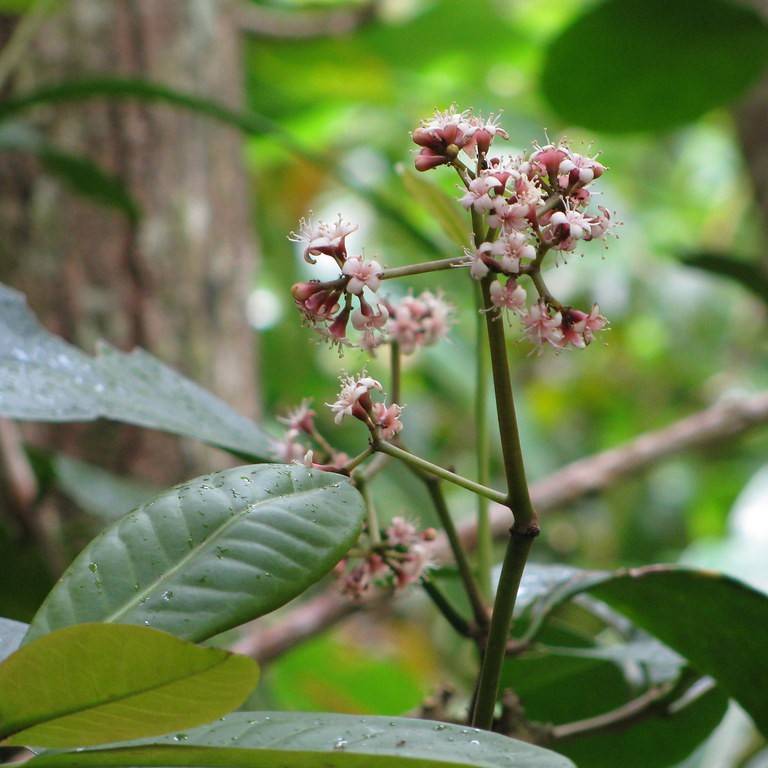
The Bird Catcher Tree is a broadleaf evergreen with smooth, light gray bark and large, glossy, oval-shaped green leaves that emit a faint resinous scent when crushed. It produces small, fragrant greenish-white flowers in clusters, followed by long, narrow seed pods coated in a thick, sticky mucilage that adheres to fur, feathers, and clothing. While the sticky pods are a nuisance in residential settings, they are a natural adaptation for seed dispersal across the tree’s native island habitats.
Care Guide
Watering
Water the Bird Catcher Tree regularly during the growing season, allowing the top 2 inches of soil to dry out between waterings to prevent root rot. Reduce watering frequency in winter when growth slows, only moistening the soil when it is nearly completely dry. Avoid overwatering, as this species is sensitive to soggy soil conditions.
Light
Thrives in full sun to partial shade, with at least 6 hours of direct sunlight daily for optimal growth and flowering. In hotter tropical climates, it benefits from light afternoon shade to prevent leaf scorch. Indoor specimens require a bright, south-facing window or supplemental grow lights to maintain healthy foliage.
Soil
Prefers well-draining, loamy or sandy soil with a slightly acidic to neutral pH range of 6.0 to 7.5. Avoid heavy, compacted clay soils that retain excess moisture, as this can cause root damage. A mix of garden soil, coarse sand, and organic compost works well for both in-ground and container-grown specimens.
Fertilizer
Feed with a balanced, slow-release granular fertilizer in early spring, mid-summer, and early fall to support robust growth. Avoid high-nitrogen fertilizers, as these can promote excessive foliage growth at the expense of flowering and seed production. Pause fertilization entirely during the cooler winter months when the tree is dormant.
Temperature
Grows best in warm temperatures between 65°F and 85°F (18°C to 29°C), and is only hardy in USDA zones 10 to 12. It cannot tolerate frost, and temperatures below 32°F (0°C) will cause leaf drop and potentially kill the tree. Cooler climate specimens must be grown in containers and moved indoors during winter.
Pruning
Prune in late winter or early spring before new growth emerges to shape the tree and remove any dead, damaged, or crossing branches. Regular pruning can also help control the tree’s size for container cultivation and reduce the number of sticky seed pods produced if desired. Always wear gloves when pruning, as the sap may cause mild skin irritation in sensitive individuals.
Propagation
Most commonly propagated from semi-hardwood cuttings taken in late summer, dipped in rooting hormone, and planted in a moist, well-draining propagation medium under high humidity. It can also be grown from fresh seed, though germination is slow and may take 3 to 6 months, and seedlings often take 3 to 4 years to reach maturity and produce flowers. Seed propagation is less common for cultivated specimens due to the nuisance of sticky seed pods.
Humidity
Prefers moderate to high humidity levels between 50% and 70%, consistent with its native tropical habitat. Dry indoor air can cause leaf browning at the edges, so mist indoor specimens regularly or place them on a pebble tray filled with water to boost ambient humidity. Outdoor specimens in arid climates may require occasional foliar spraying to maintain adequate moisture levels.
Repotting
Container-grown Bird Catcher Trees should be repotted every 2 to 3 years in early spring, moving to a pot one size larger to accommodate root growth. Use a well-draining potting mix and ensure the container has ample drainage holes to prevent waterlogging. Mature specimens can be top-dressed with fresh compost annually instead of repotting to limit size and reduce disturbance.
Uses & Symbolism
In its native range, the Bird Catcher Tree is sometimes planted as a fast-growing shade tree for parks and large outdoor spaces, and its lightweight wood is occasionally used for crafting small items and firewood. Some Indigenous Pacific communities use extracts from the bark and leaves for traditional medicinal purposes to treat minor wounds and skin irritations. It is rarely grown as a houseplant, though small young specimens are sometimes kept as novelty foliage plants in large, bright indoor spaces.
Diseases & Pests
The Bird Catcher Tree is relatively pest-resistant, but may be susceptible to common sap-sucking insects such as aphids, mealybugs, and scale, which can be treated with neem oil or insecticidal soap. Overwatering or poorly draining soil frequently leads to root rot, which can cause yellowing leaves, wilting, and eventual tree death if not addressed quickly. Fungal leaf spot may occur in overly humid, poorly ventilated conditions, and can be managed by removing affected foliage and improving air circulation around the tree.
Related plants
Other plants you might like if you grow Bird Catcher Tree.