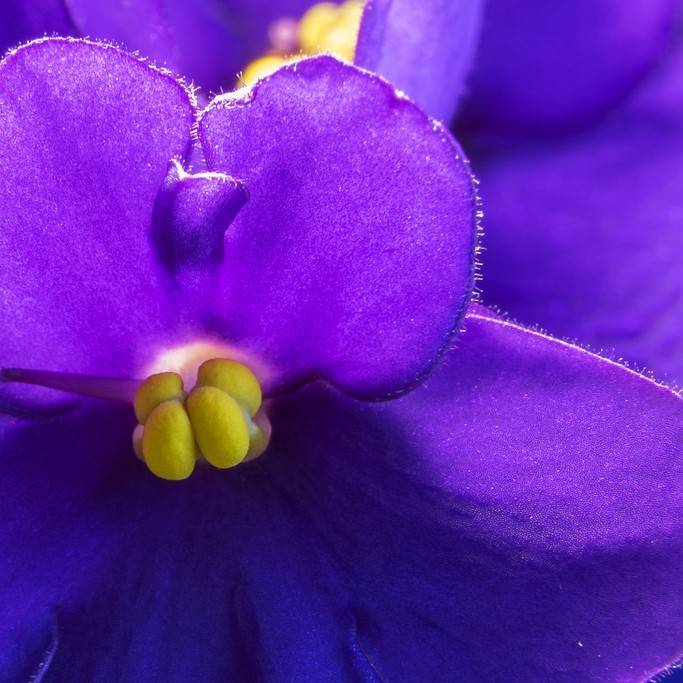
African Violet
Streptocarpus ionanthus (syn. Saintpaulia ionantha)
Overview
African violets are beloved houseplants characterized by their soft, fuzzy, rounded leaves and clusters of small, vibrant flowers in shades of purple, pink, white, blue, and bicolor patterns. Native to shaded, humid forest understories in eastern Africa, they have been widely cultivated into hundreds of ornamental varieties suited for indoor container growth. With proper care, they can bloom repeatedly throughout the year, making them a staple in indoor plant collections.
Care Guide
Watering
Water African violets from the base by filling the saucer under the pot, allowing the soil to absorb moisture for 15-20 minutes before emptying excess water to avoid leaf spot or rot. Let the top 1 inch of soil dry out between waterings, and avoid getting cold water directly on the fuzzy leaves to prevent unsightly brown spots. Overwatering is the most common cause of health issues, so ensure pots have adequate drainage holes to prevent soggy soil.
Light
African violets thrive in bright, indirect light, such as that from a north or east-facing window, as direct sunlight will scorch their delicate leaves. They can also be grown successfully under artificial grow lights placed 12-15 inches above the plants for 12-14 hours per day, which encourages consistent blooming even in low-light indoor spaces. Insufficient light will result in leggy growth and few to no flowers, while too much light will cause leaf yellowing and browning.
Soil
Use a light, well-draining, slightly acidic potting mix with a pH between 6.0 and 6.5, specifically formulated for African violets or gesneriads, often containing peat moss, perlite, and vermiculite. The mix should retain moisture without becoming compacted, as heavy, dense soil will suffocate the plant's shallow, fine root system and lead to root rot. Avoid using garden soil or mixes with large amounts of heavy bark, which do not provide the proper aeration these plants require.
Fertilizer
Feed African violets with a balanced, water-soluble fertilizer formulated for flowering houseplants, diluted to half the recommended strength, every 4-6 weeks during the active growing season in spring and summer. Look for a fertilizer with an N-P-K ratio of roughly 14-12-14, which supports both healthy foliage growth and consistent flower production. Avoid over-fertilizing, as excess salts can build up in the soil, burning the roots and causing leaf tip browning, and withhold fertilizer entirely during the dormant winter months.
Temperature
African violets prefer consistent warm temperatures between 65-75°F (18-24°C), which matches typical indoor household temperatures, making them well suited for indoor growing. They are sensitive to sudden temperature fluctuations, cold drafts, and temperatures below 60°F (15°C), which can cause leaf wilting, stunted growth, and flower drop. Keep plants away from drafty windows, air conditioning vents, and heating sources to maintain a stable temperature year-round.
Pruning
Prune African violets regularly by removing yellowed, damaged, or dead leaves and spent flower stalks at the base using clean, sharp scissors or tweezers to encourage new growth and more blooms. Remove any suckers (small secondary plantlets) that grow from the base of the main plant to direct energy to the primary plant and prevent overcrowding in the pot. Over time, if the plant develops a bare 'neck' above the soil line, you can prune back the top portion and repot it deeper to encourage new root growth.
Propagation
The most common method of propagating African violets is leaf cuttings: snip a healthy mature leaf with 1-2 inches of stem, allow the cut end to callus for a few hours, then plant it in moist, well-draining propagation mix. Keep the cutting in a warm, humid location with bright indirect light, and new plantlets will emerge from the base of the leaf in 6-8 weeks, at which point they can be separated and potted individually. African violets can also be propagated by dividing mature clumps during repotting, or grown from seed, though seed-grown plants will not come true to the parent variety and take much longer to reach blooming size.
Humidity
African violets prefer moderate to high humidity levels between 50-60%, which is often higher than typical indoor household humidity, especially during dry winter months. Increase humidity around the plants by placing them on a pebble tray filled with water (ensuring the pot is not sitting directly in the water), grouping them with other plants, or using a small room humidifier. Avoid misting the leaves directly, as the water droplets can get trapped in the fuzzy foliage and cause fungal leaf spots or rot.
Repotting
Repot African violets every 12-18 months into a pot that is only 1-2 inches larger than the current root ball, as they bloom best when slightly root-bound, and overly large pots hold excess moisture that can cause root rot. Use fresh African violet potting mix when repotting, and gently loosen the root ball to remove old compacted soil before placing the plant in the new pot, making sure to plant it at the same depth it was growing previously. The best time to repot is in early spring, just before the active growing season begins, and avoid repotting while the plant is actively blooming to prevent flower drop.
Uses & Symbolism
African violets are almost exclusively grown as ornamental houseplants, valued for their compact size, long bloom period, and wide range of flower colors that make them ideal for tabletops, windowsills, and indoor display gardens. They are commonly used in indoor plant collections and are a popular choice for gift plants, as they are relatively small and can bloom consistently for years with proper care. There are also competitive cultivation societies and shows dedicated to African violets, where hobbyists display rare and uniquely patterned varieties.
Diseases & Pests
Common pests affecting African violets include aphids, mealybugs, spider mites, and thrips, which can be treated with insecticidal soap or neem oil applied carefully to avoid damaging the fuzzy leaves. Fungal diseases such as powdery mildew, botrytis blight, and root rot are common when plants are overwatered, exposed to cold water on the leaves, or kept in overly humid, poorly ventilated conditions. Crown rot, a fatal fungal condition, can occur if the plant is planted too deeply or if water pools at the base of the leaves, so ensure proper planting depth and avoid getting water on the crown of the plant.
Guides that mention African Violet
Related plants
Other plants you might like if you grow African Violet.