Vine Identification by Leaf: A Simple Guide for Beginner Gardeners
Learn how to do vine identification by leaf using key traits like shape, texture, and arrangement to spot common ornamental and wild vines in your yard.
Vine Identification by Leaf: A Simple Guide for Beginner Gardeners
If you’ve ever spotted a trailing or climbing plant popping up unannounced in your garden bed, wrapping around your fence, or even sprouting near your houseplant pots, you know how frustrating it can be to figure out what it is when there are no flowers in sight. Vine identification by leaf is a practical, accessible skill that works year-round, even for immature plants or species that only bloom for short periods.
Unlike broad guides that rely on flower color or growth size to make an ID, leaf-based identification uses consistent, easy-to-spot traits that stay visible on most perennial vines for their entire growing season. Getting this ID right matters: misidentify a vine, and you might accidentally pull out a desirable ornamental variety, or leave an invasive species to spread unchecked across your yard. For houseplant owners, this skill also helps you tell apart harmless volunteer vines from weed seedlings that can compete with your potted plants for nutrients.
Why Vine Identification by Leaf Works (Even When No Flowers Are Growing)
Flowers are a handy ID marker, but they’re often only present for a few weeks out of the year. Many newly planted vines take 1 to 3 years to bloom for the first time, and some wild species only flower after receiving very specific sun or water conditions. Perennial evergreen vines keep their leaves through the winter, while deciduous vines regrow leaves weeks before they put out flower buds, making leaves the most reliable ID marker available for most of the year.
Leaf traits are also far more consistent across a single species than flower appearance, which can vary slightly based on soil pH, sun exposure, and overall plant health. That means even a young, small vine will have the same core leaf traits as a mature, fully grown specimen of the same species, making accurate identification possible long before the plant reaches its full size.
4 Key Leaf Traits to Use for Vine Identification
When you’re starting out with vine leaf identification, focus on these four simple, easy-to-spot traits first. You don’t need any special tools to assess them, just a close look at the plant:
1. Leaf shape
Leaf shape is the most obvious first marker to note. Common vine leaf shapes include:
- Heart-shaped (cordate) with a cleft at the base where the stem attaches
- Lobed, with deep or shallow indentations along the edges
- Oval, with smooth, rounded sides and a tapered or blunt tip
- Compound, where a single leaf stem holds multiple small leaflets instead of one single leaf blade
2. Leaf arrangement
Leaf arrangement refers to how leaves attach to the main vine stem:
- Opposite: Two leaves grow directly across from each other on the same point on the stem
- Alternate: Leaves grow in a staggered pattern, with one leaf per node on alternating sides of the stem
3. Texture and edge details
Run a finger lightly over the top and underside of the leaf, and look closely at the edges:
- Is the surface smooth, fuzzy, waxy, or rough to the touch?
- Are the edges smooth, toothed (with small, sharp serrations), or wavy?
- Are there any visible hairs along the leaf veins or stem?
4. Variegation or color patterns
Most vine leaves are solid green, but some have distinct markings that make them easy to identify, such as white or cream splotches along the veins, red-tinged new growth, or silver streaks across the leaf surface. Note that young, newly unfurled leaves often have a lighter green color than mature leaves, so stick to fully grown leaves when assessing color for ID.
Common Ornamental Vines You Can ID by Leaf
These four popular ornamental vines have very distinct leaf traits, making them easy to identify even without flowers. All are pet-safe, so they’re low-risk for households with cats or dogs.
Chocolate vine
Chocolate vine (Akebia quinata) has one of the most recognizable leaf structures of any common vine: a compound palmate leaf with 5 smooth, oval leaflets fanning out from a single central stem, like fingers on a hand. The leaf surface is glossy and waxy to the touch, with smooth, untoothed edges, and the leaves grow in an alternate arrangement along the vine stem. This fast-growing vine is semi-evergreen in mild climates, so it keeps most of its leaves through the winter.
Coral vine
Coral vine (Antigonon leptopus) has distinct heart-shaped leaves with pointed, tapered tips, and a slightly fuzzy, velvety texture on both the upper and lower leaf surfaces. The leaf edges are smooth, and leaves grow in an alternate pattern along the stem. In warm climates, this vine is evergreen, and its leaves often have a subtle blue-green tint that sets it apart from other heart-shaped leaf vines.
Cross vine
Cross vine (Bignonia capreolata 'Atrosanguinea') has oblong, smooth-edged leaves that grow in opposite pairs directly across from each other on the stem. The most distinct trait is the small, coiled tendril that grows at the tip of each pair of leaves, which the vine uses to cling to fences, trellises, and tree bark. The leaf surface is glossy and dark green, and may turn a reddish-purple color in the winter in cooler climates.
Cup and saucer vine
Cup and saucer vine (Cobaea scandens) has large, oval leaves with a pointed tip and subtle wavy edges that lack sharp serrations. Each leaf is compound, with 2 to 4 leaflets growing on a single stem, and a small climbing tendril at the end of each leaf stem to help the vine scale supports. The leaf surface is smooth and matte, not glossy, and grows in an alternate arrangement along the vine.
Common Leaf Lookalikes That Trip Up New Gardeners
Some tree saplings and perennial flowers have leaf shapes that closely resemble common vine leaves, leading to misidentification for new gardeners. These two checks will help you tell them apart:
- Look for climbing structures: Vines always have trailing stems, coiled tendrils, or aerial roots to cling to surfaces. Non-vine plants will not have these features.
- Check growth habit: Tree saplings grow upright with a single woody trunk, while perennial flowers grow in clumps rather than trailing or climbing.
The most common lookalikes include:
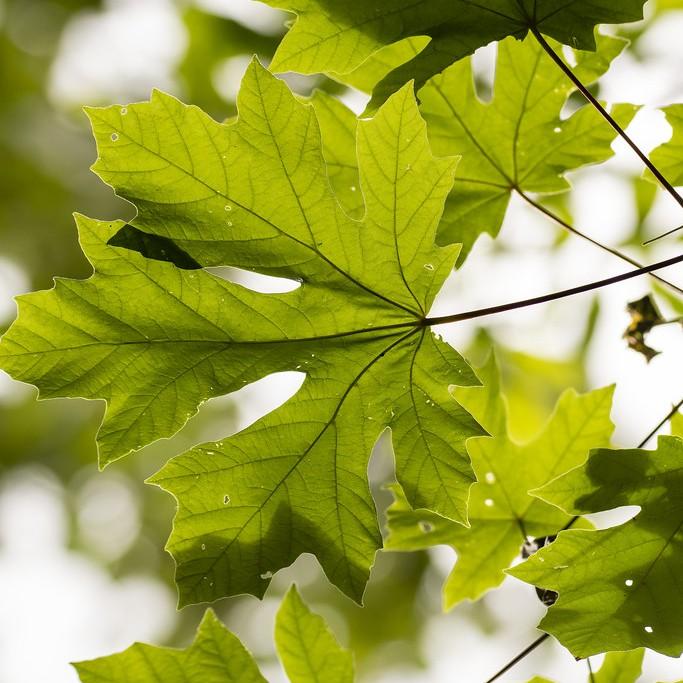
- Maple leaves: Big Leaf Maple saplings and Ever Red Lace-Leaf Japanese Maple have lobed leaves that are sometimes mistaken for lobed vine species like Boston ivy. Unlike vines, these maple saplings grow upright with a single woody trunk and no climbing tendrils.
- Fern-leaf yarrow: This perennial flower has finely divided, feathery leaves that look similar to some tropical vine species with compound foliage. Unlike vines, fern-leaf yarrow grows in tight, upright clumps and produces tall flower stalks in the summer, with no trailing or climbing growth.
Step-by-Step Process for Vine Identification by Leaf
Use this simple workflow to identify any unknown vine you spot, whether it’s growing in your yard, along a hiking trail, or even as an uninvited guest in your houseplant pot:
- Take a clear photo of a fully mature, undamaged leaf, plus a close-up shot of how the leaf attaches to the stem to show its arrangement (opposite or alternate). If possible, snap a photo of any tendrils or climbing structures on the vine for extra context.
- Note your growing conditions: Is the vine growing in full sun, partial shade, or full shade? What climate zone do you live in? This will help narrow down species that are known to grow well in your area.
- Cross-reference the leaf’s traits (shape, arrangement, texture, color) with the profiles in this guide to see if you can find a match.
- If you’re still unsure, use the Sproutly app to scan the leaf photo for a fast, verified ID match. The app draws on a large database of vine species to compare your photo against confirmed samples, and will flag if the plant is actually a non-vine lookalike.
- Do a final check of the plant’s growth habit to confirm it is a vine: look for trailing stems, climbing tendrils, or aerial roots that cling to nearby surfaces.
What to Do After You Identify Your Vine
Your next steps will depend on what kind of vine you’ve identified:
- If it’s a desirable ornamental variety, look up its care profile to learn about its sun, water, and pruning needs to help it thrive. Many common ornamental vines grow quickly, so you may need to install a trellis or support to keep it from spreading into unwanted areas of your yard.
- If it’s an unknown or potentially invasive species, confirm your ID with your local extension office or cross-reference the care guide database in the Sproutly app to decide next steps. Invasive vines can crowd out native plants and damage structures, so it’s best to remove them as soon as possible if they are confirmed to be a problem in your region.
- If you found the vine growing in a houseplant pot, you can choose to transplant it to its own pot if it’s a desirable ornamental, or gently pull it out by the roots to prevent it from competing with your existing houseplant for nutrients.
All four of the ornamental vines profiled in this guide are pet-safe, so you don’t need to worry about keeping them away from curious cats or dogs. For any other vine species, check the full care profile for pet safety notes before letting animals near the plant.
Final Tips for Accurate Vine Leaf ID
Keep these quick best practices in mind to avoid common identification mistakes:
- Always use a fully mature, undamaged leaf for ID. Newly unfurled leaves often have different shapes, colors, and textures than mature leaves, and damaged leaves may have missing edges that obscure key traits.
- Note if new leaves have different coloring than mature growth. Many vines produce red or light green new growth that darkens as the leaf matures, so don’t use young leaves as your primary reference for color.
- Don’t rely solely on leaf size. Leaf size can vary widely based on sun exposure, water access, and overall plant health, so a young vine may have much smaller leaves than a mature specimen of the same species.
- If you’re stuck on a hard-to-identify sample, the Sproutly app’s plant identification feature can help clear up confusion in seconds, using your leaf photo to cross-reference against thousands of confirmed species records.
FAQ
Can you accurately do vine identification by leaf alone, without seeing flowers?
Yes! Most common vine species have distinct leaf shapes, arrangements, and textures that are unique enough for reliable ID, even when the plant is not blooming. For less common varieties, cross-referencing growth habit and growing conditions will help you narrow down your match.
How do I tell a vine leaf apart from a tree sapling leaf?
The fastest check is to look at the growth habit: vines will have trailing stems, climbing tendrils, or aerial roots to cling to surfaces, while tree saplings have a single, woody upright trunk without climbing structures. For example, Big Leaf Maple saplings have lobed leaves similar to some vines, but they grow upright rather than climbing.
What’s the easiest way to identify an unknown vine in my yard?
Start by noting the leaf’s shape, edge texture, and arrangement on the stem, then cross-reference with common vine profiles for your region. If you’re still unsure, you can snap a photo of the leaf and use the Sproutly app’s plant identification feature to get a fast, accurate match.
Are any of the common ornamental vines with identifiable leaves toxic to pets?
Many popular ornamental vines, including chocolate vine, coral vine, cross vine, and cup and saucer vine, are pet-safe. If you’re unsure about a vine you’ve identified, check its full care profile for pet safety notes before letting animals near it.
Try Sproutly
Stuck on a tricky vine leaf that won’t match any of the profiles in this guide? The Sproutly app makes plant identification fast and easy, with tools to scan leaf photos, access detailed care guides, and track the health of all your garden and houseplant species. To get started identifying vines and other plants in your space, visit https://heysproutly.com.
Ähnliche Artikel
Weitere Guides, die dir gefallen könnten
Weeping Ficus: Complete Care Guide, Cultivars, and Common Issues
Learn how to grow and care for a weeping ficus (Ficus benjamina) indoors, including light, water, and humidity needs, plus common problems to avoid.
2026-06-27 · 13 min read
Melon Fruit: Types, Nutrition, Growing Tips, and Selection Guide
Learn all about melon fruit, including popular varieties, nutritional benefits, how to grow them at home, and how to pick perfectly ripe melons every time.
2026-06-26 · 13 min read
Strawberry Tree: Complete Care, Identification, and Usage Guide for Arbutus unedo
Learn to identify, grow, and use the strawberry tree (Arbutus unedo), a pet-safe evergreen that produces edible fruit and year-round garden interest.
2026-06-26 · 17 min read