China Aster: Complete Care, Growing Guide, and Varieties
Learn how to grow and care for China aster (Callistephus chinensis), a pet-safe, full-sun flower that delivers long-lasting garden color for months.
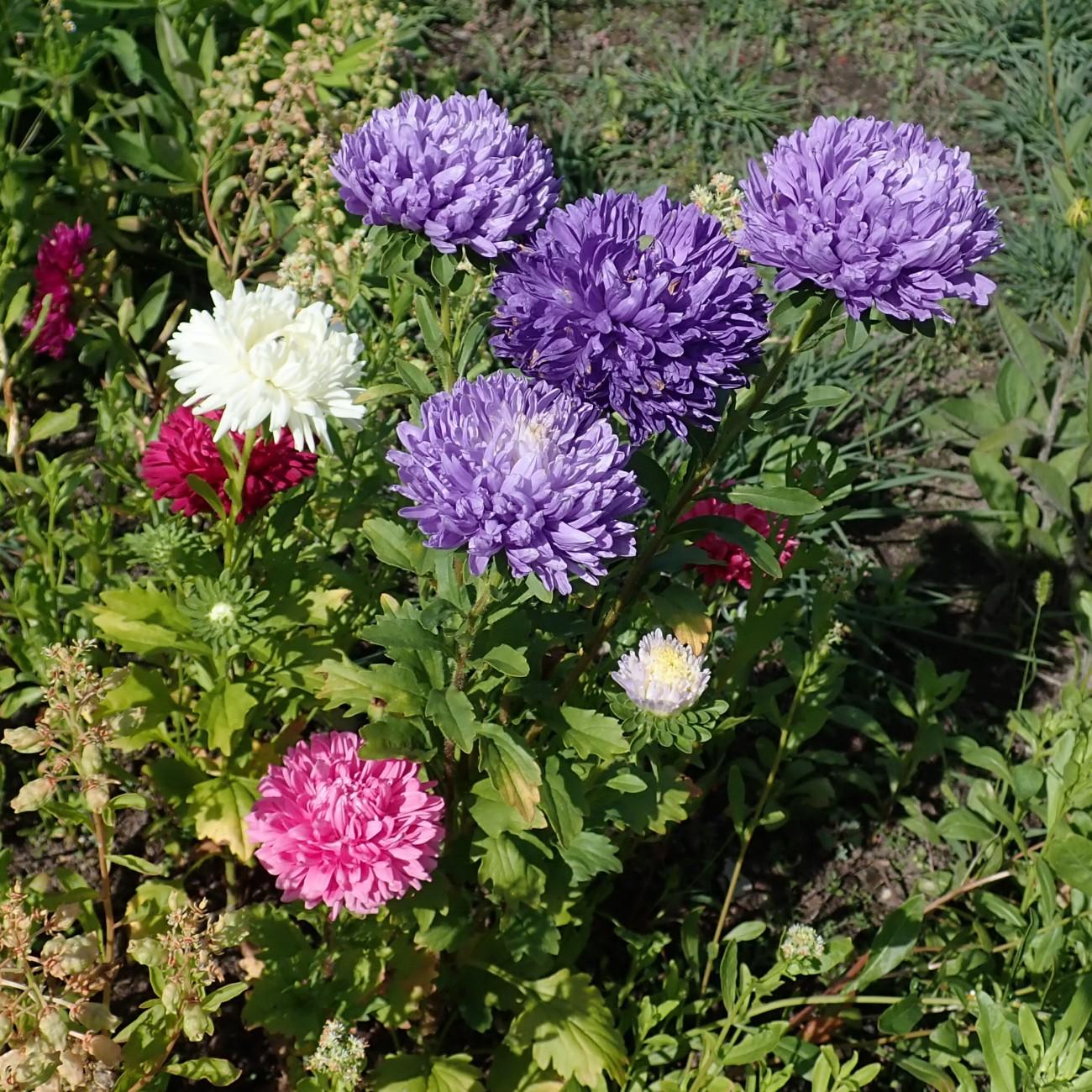
China Aster: Complete Care, Growing Guide, and Varieties
China aster (Callistephus chinensis) is a full-sun, pet-safe annual flower native to East Asia that produces ruffled, long-lasting blooms from late spring to early fall. It is widely grown for garden color and cut flower arrangements, with simple care requirements suitable for most temperate growing zones.
What Is China Aster (Callistephus chinensis)?
China aster is the only species in the Callistephus genus, a distinct group of flowering plants separate from true asters in the Aster genus. It is an annual plant, meaning it completes its full life cycle in one growing season, unlike many true asters which are perennial.
Taxonomic classification
China aster belongs to the Asteraceae family, the same group that includes daisies, sunflowers, and chrysanthemums. Its full scientific classification is:
- Kingdom: Plantae
- Clade: Tracheophytes, Angiosperms, Eudicots, Asterids
- Order: Asterales
- Family: Asteraceae
- Genus: Callistephus
- Species: C. chinensis
Unlike the hundreds of species in the Aster genus, there is only one recognized species in the Callistephus genus, though hundreds of cultivated China aster varieties exist for different bloom shapes, colors, and heights. If you are unsure if a seedling or unlabeled plant is China aster, the Sproutly app can identify it from a photo and cross-reference it against lookalike aster species.
Key distinguishing traits from true asters
China aster has several consistent traits that set it apart from true Aster genus plants. Most notably, its blooms are larger and more densely ruffled, with double or semi-double petal layers that give them a pom-pom or peony-like appearance, compared to the open, daisy-like shape of most true asters. China aster also has a longer bloom season, often starting 4–6 weeks earlier in the summer than common perennial aster varieties.
Another key difference is life cycle: China aster is an annual that dies at the end of the growing season, while nearly all true asters are perennials that return for multiple years. China aster also produces much larger seeds with a fuzzy, brush-like pappus, compared to the small, fine seeds of true asters.
Native distribution across China, Korea, and Mongolia
Wild China aster is native to a broad swath of East Asia, spanning northern and central China, the Korean Peninsula, and Mongolia. It grows naturally in open meadows, grassy hillsides, and forest clearings at elevations up to 8,200 feet, where it receives full sun and well-drained soil. Cultivated varieties have been grown in East Asia for over 2,000 years, and were introduced to Europe in the 1700s before spreading to North America as a garden ornamental.
China Aster Appearance and Bloom Characteristics
China aster grows in upright, bushy clumps with sturdy, branching stems that support multiple blooms per plant. Its leaves are medium green, ovate, and slightly toothed along the edges, with a soft, fuzzy texture on the underside.
Typical height range (1–3 feet)
Most China aster cultivars grow between 1 and 3 feet tall at maturity, depending on the variety. Dwarf cultivars, often used for container planting or front-of-bed edging, stay under 1 foot tall, while tall cut-flower varieties can reach up to 3 feet with stems sturdy enough to support large, heavy blooms without staking. Shorter varieties spread 8–12 inches wide, while taller varieties spread up to 18 inches wide at full maturity.
Bloom color variations (white, pink, purple, red, yellow)
China aster blooms come in a wide range of solid colors, including pure white, soft blush pink, deep magenta, lavender, royal purple, bright red, and pale yellow. Bicolor varieties, with petals that fade from a darker edge to a lighter center, are also available. Unlike many true asters, which only produce yellow centers, China aster centers can match the petal color or be a contrasting golden yellow depending on the cultivar.
Bloom shapes vary by variety, with three common forms: single blooms with a central disk and one layer of petals, semi-double blooms with 2–3 layers of petals, and fully double pom-pom or peony-shaped blooms with dozens of overlapping petal layers that obscure the central disk entirely.
Bloom season length (late spring to early fall, up to 4 months)
The China aster bloom season starts in late spring, typically 10–12 weeks after seeds are sown, and continues through early fall, for up to 4 months of continuous color with proper care. Individual blooms last 2–3 weeks on the plant before fading. Deadheading spent blooms by cutting the stem back to the next set of healthy leaves encourages the plant to produce new flower buds, extending the bloom season until the first hard frost.
China Aster vs. Common Aster Varieties
Many garden centers and seed catalogs label China aster alongside true aster varieties, which can lead to confusion about growth habits and care requirements. The most reliable way to distinguish the two groups is by genus: China aster is Callistephus chinensis, while all true asters belong to the Aster genus.
Comparison to Aster frikartii 'Flora's Delight'
Aster frikartii 'Flora's Delight' is a perennial true aster with open, daisy-like blooms in shades of magenta and pale pink, growing up to 2 feet tall. Unlike China aster, which blooms from late spring to early fall, 'Flora's Delight' only blooms from mid to late summer, with a 6–8 week bloom window. 'Flora's Delight' is hardy to USDA zone 5 and returns year after year, while China aster is an annual that must be replanted each season in all growing zones.
Comparison to Aster 'Monch' and 'Little Carlow'
Aster 'Monch' is a perennial true aster with deep purple, daisy-like blooms on 3-foot-tall stems, blooming from mid to late summer. It has a loose, open growth habit, compared to the dense, bushy shape of China aster. Aster 'Little Carlow' is a compact perennial true aster that grows 2–3 feet tall, with vivid purple petals and bright orange-yellow centers, blooming exclusively in early fall. Both varieties are cold-hardy to USDA zone 4, while China aster can only tolerate short dips down to 25°F and will die after the first hard frost.
How to tell China aster apart from other daisy-like flowers
When plants are not in bloom, China aster can be distinguished from lookalike daisy family plants by its fuzzy, toothed leaves and sturdy, green stems with no woody growth at the base. In bloom, its dense, ruffled petal layers are a clear marker; most other daisy-like flowers, including true asters, Shasta daisies, and coneflowers, have only a single layer of petals around a central disk. If you are uncertain about a plant’s identity, the Sproutly app can compare your photo to its database of over 10,000 plant species to confirm if it is China aster or a lookalike.
Ideal Growing Conditions for China Aster
China aster is a low-fuss plant that thrives in standard garden conditions, with minimal special requirements to produce abundant blooms. It adapts well to most temperate climates, as long as it receives sufficient sunlight and is planted in well-drained soil.
Full sun requirements (6+ hours of direct light daily)
China aster requires 6+ hours of unfiltered direct sunlight per day to produce healthy, dense blooms. Plants grown in partial shade will develop leggy, stretched stems, fewer blooms, and are more susceptible to fungal diseases like powdery mildew. In regions with extreme summer heat where temperatures regularly exceed 90°F, China aster can benefit from 1–2 hours of afternoon shade to prevent petal scorch, but should still receive full sun during the cooler morning hours.
Temperature range (60–75°F for optimal growth, hardy to 25°F for short periods)
The optimal temperature range for China aster growth is 60–75°F, which supports steady stem and leaf development and consistent bud formation. Seeds will germinate in soil temperatures as low as 55°F, but germination is faster and more uniform when soil is between 65–70°F. Mature plants can tolerate short dips down to 25°F, but sustained temperatures below 30°F will damage foliage and stop bloom production. China aster has moderate heat tolerance, but will stop producing new buds if temperatures stay above 90°F for more than 3–4 days.
Humidity preferences (40–60% relative humidity, tolerant of higher levels)
China aster grows best in 40–60% relative humidity, which is standard for most temperate growing regions. It is more tolerant of high humidity than many other garden annuals, though prolonged humidity above 70% increases the risk of fungal foliar diseases. To reduce disease risk in humid climates, ensure plants are spaced far enough apart for good air circulation, and avoid watering foliage directly.
Planting and Propagation Steps
China aster is almost exclusively grown from seed, as stem cuttings have a low success rate and most garden centers only sell young seedlings in small quantities. It can be planted either by direct sowing outdoors after the last frost, or started indoors 6–8 weeks before the last frost date for earlier blooms.
Direct sowing vs. starting transplants indoors
Direct sowing is the simplest method for planting China aster, and works well in regions with long growing seasons of 120+ frost-free days. Sow seeds directly into prepared garden soil after all risk of frost has passed, when soil temperatures are at least 55°F. For regions with shorter growing seasons, start seeds indoors in seed trays 6–8 weeks before your average last frost date to give plants a head start, then transplant seedlings outdoors after the last frost when they have 3–4 sets of true leaves. Starting transplants indoors will result in blooms 3–4 weeks earlier than direct sowing.
Seed depth (1/8 inch) and germination timeline (7–14 days)
China aster seeds require light to germinate, so plant them at a depth of exactly 1/8 inch, and cover them with a thin layer of fine soil or vermiculite that allows light to pass through. Keep soil consistently moist but not waterlogged during germination, which takes 7–14 days at soil temperatures between 65–70°F. If starting seeds indoors, use a grow light placed 2–3 inches above the seedlings to prevent leggy growth, and keep light on for 12–14 hours per day.
Recommended plant spacing (12–18 inches apart to prevent mildew)
Space China aster plants 12–18 inches apart at planting time, regardless of whether you are sowing seeds directly or transplanting seedlings. This spacing allows for full air circulation around each plant, which reduces the risk of powdery mildew and other fungal diseases that thrive in crowded, damp conditions. Dwarf varieties can be spaced 12 inches apart, while taller cut-flower varieties should be spaced 18 inches apart to accommodate their wider spread and taller stems.
Ongoing China Aster Care
Once established, China aster requires minimal routine care to thrive and produce continuous blooms through the growing season. Most care tasks focus on consistent watering, occasional fertilization, and deadheading to extend bloom time.
Watering schedule (1 inch per week, avoid wetting foliage)
Water China aster deeply once per week, providing 1 inch of water per week from either rain or supplemental watering. Check soil moisture before watering by inserting a finger 2 inches into the soil; if the soil is dry at that depth, it is time to water. Always water at the base of the plant, directly onto the soil, to avoid wetting the foliage, which can lead to fungal disease. During periods of extreme heat or drought, increase watering to twice per week to prevent soil from drying out completely, as China aster does not tolerate extended dry periods.
Soil requirements (well-draining loam with pH 6.0–7.0)
China aster grows best in well-draining loam soil with a neutral to slightly acidic pH between 6.0 and 7.0. It will tolerate sandy or clay soil as long as it is amended with organic matter like compost or well-rotted manure to improve drainage and nutrient content. Avoid planting China aster in heavy, waterlogged soil, which can cause root rot and kill the plant within a few days. If planting in containers, use a high-quality potting mix with perlite or vermiculite added to improve drainage, and ensure the container has at least one drainage hole.
Fertilization needs (balanced 10-10-10 fertilizer every 4 weeks during bloom season)
Fertilize China aster with a balanced, water-soluble 10-10-10 NPK fertilizer every 4 weeks during the bloom season, starting when the first flower buds appear. Dilute the fertilizer to half the strength recommended on the package label to avoid over-fertilizing, which can lead to excessive leaf growth and few blooms. Stop fertilizing 4 weeks before your average first frost date to allow the plant to finish its growth cycle before cold weather arrives. If you have amended your soil with compost before planting, you may only need to fertilize once per season, as compost provides sufficient slow-release nutrients for most China aster growth.
Common Pests and Diseases for China Aster
China aster is relatively resistant to most common garden pests and diseases, but a few specific issues can affect plants, especially when growing conditions are less than ideal. Most issues are preventable with proper site selection and care routine adjustments.
Aster yellows phytoplasma transmission via leafhoppers
Aster yellows is a bacterial phytoplasma disease spread by leafhoppers, small winged insects that feed on plant sap. Symptoms of aster yellows include yellowed, stunted foliage, distorted blooms that are green or discolored, and excessive branching of stems. There is no cure for aster yellows, so infected plants must be removed and disposed of immediately to prevent the disease from spreading to other plants in the Asteraceae family. To prevent aster yellows, control leafhopper populations by using floating row covers over young plants, or applying insecticidal soap to infested foliage.
Powdery mildew prevention tips
Powdery mildew is a fungal disease that appears as a white, powdery coating on China aster foliage, usually caused by poor air circulation, high humidity, or wet foliage. To prevent powdery mildew, ensure plants are spaced 12–18 inches apart for good air flow, water at the base of the plant instead of overhead, and avoid planting China aster in shaded locations. If powdery mildew appears, treat it by spraying affected foliage with a solution of 1 part baking soda, 1 part horticultural oil, and 100 parts water, or a commercial organic fungicide according to package directions.
Fusarium wilt resistance in modern cultivars
Fusarium wilt is a soil-borne fungal disease that causes China aster plants to wilt and die suddenly, even when soil is moist. It was a major issue for China aster growers in the 20th century, but nearly all modern China aster cultivars are bred to be resistant to fusarium wilt, making the disease rare in home garden settings. To reduce risk further, avoid planting China aster in the same garden bed where other Asteraceae family plants have grown in the past 2–3 years, as the fungus can persist in soil for multiple years.
Benefits and Uses of China Aster
China aster is a versatile garden plant with multiple uses beyond ornamental garden color, including cut flower arrangements, pet-safe landscaping, and traditional medicinal applications.
Cut flower longevity (7–10 days in a vase)
China aster is a popular cut flower due to its long vase life of 7–10 days, and sturdy stems that hold up well in arrangements. To maximize vase life, cut blooms early in the morning when they are ½ to ¾ open, immediately place stems in a bucket of lukewarm water, and remove any leaves that will be below the water line in the vase. Change vase water every 2–3 days, and trim ½ inch from the bottom of stems at an angle each time you change the water to keep blooms fresh.
Pet-safe non-toxicity for dogs and cats
China aster is non-toxic to dogs, cats, and horses, making it a safe choice for yards, gardens, and containers that are accessible to pets. Unlike some common garden flowers like lilies, tulips, and daffodils, which are toxic to pets if ingested, China aster poses no risk of poisoning even if a pet chews on leaves or blooms. The Sproutly app includes toxicity information for all plant entries, including China aster, so you can confirm the safety of any plant before adding it to your pet-accessible garden.
Traditional medicinal uses for respiratory and digestive ailments in East Asian herbalism
Wild China aster has been used in traditional East Asian herbalism for over 1,000 years to treat respiratory and digestive ailments. The dried roots and flowers are brewed into teas or tinctures to reduce cough, soothe sore throats, and ease digestive discomfort. Modern research has not verified these uses, and home preparation of China aster for medicinal use is not recommended without guidance from a trained herbalist, as cultivated varieties may have different chemical compositions than wild plants.
Troubleshooting Common China Aster Issues
Most China aster growing issues are caused by improper growing conditions or care routine gaps, and are easy to fix with simple adjustments.
Yellowing leaves causes and fixes
Yellowing leaves on China aster are most often caused by overwatering, which leads to root rot, or underfertilization, which causes nutrient deficiency. If leaves are yellow and mushy, reduce watering frequency and check that soil drains well; if the root system is rotted, the plant cannot be saved and should be removed. If leaves are pale yellow with green veins, apply a dose of balanced 10-10-10 fertilizer to replenish soil nutrients. Yellowing leaves with brown, crispy edges are a sign of underwatering, so increase watering frequency to keep soil consistently moist but not waterlogged.
Failure to bloom solutions
If China aster is growing healthy foliage but not producing blooms, the most common cause is insufficient sunlight, as plants need 6+ hours of direct sun per day to form buds. If your plant is in a shaded location, transplant it to a sunnier spot if possible, or prune back nearby plants that are blocking sunlight. Overfertilization with a high-nitrogen fertilizer can also cause excessive leaf growth at the expense of blooms, so switch to a balanced 10-10-10 fertilizer and reduce application frequency if you suspect overfertilization. Finally, ensure plants are not overcrowded, as competition for nutrients and light can reduce bloom production.
Drooping stems troubleshooting
Drooping stems on China aster are usually caused by underwatering, which causes the plant to lose turgor pressure in its stems. Water deeply immediately, and the plant should recover within a few hours. If stems are drooping and soil is wet, the issue is root rot from overwatering; remove the plant from the soil, trim any rotted, mushy roots, and replant in fresh, well-draining soil if there are enough healthy roots left to support the plant. Tall, top-heavy China aster varieties may also droop under the weight of large blooms, so stake stems with bamboo stakes and soft twine to provide additional support.
Frequently Asked Questions
Are China asters pet-safe?
Yes, China aster (Callistephus chinensis) is non-toxic to dogs, cats, and horses, so it can be planted safely in yards accessible to pets.
How long do China aster blooms last?
Individual China aster blooms last 2–3 weeks on the plant, and the overall bloom season can stretch from late spring to early fall for up to 4 months with proper deadheading.
What is the difference between China aster and true asters?
China aster is the only species in the Callistephus genus, while true asters belong to the Aster genus. China aster typically has larger, more ruffled blooms and a longer bloom season than most common Aster frikartii cultivars.
Do China asters need full sun?
Yes, China asters require 6+ hours of direct sunlight daily to produce dense, healthy blooms. Too much shade will lead to leggy growth and reduced flowering.
Can China asters be grown in containers?
Yes, dwarf China aster cultivars grow well in 12-inch deep containers, as long as they have drainage holes, full sun access, and regular watering to prevent soil from drying out completely.
Try Sproutly
If you need help identifying China aster seedlings, distinguishing it from lookalike true aster varieties, or getting personalized care reminders for your plants, the Sproutly app can help. Upload a photo of any plant for fast, accurate identification, and access a database of thousands of plant care guides tailored to your specific growing conditions. Get started with Sproutly today to make plant care simpler and more successful.
قراءات ذات صلة
أدلة أخرى قد تعجبك
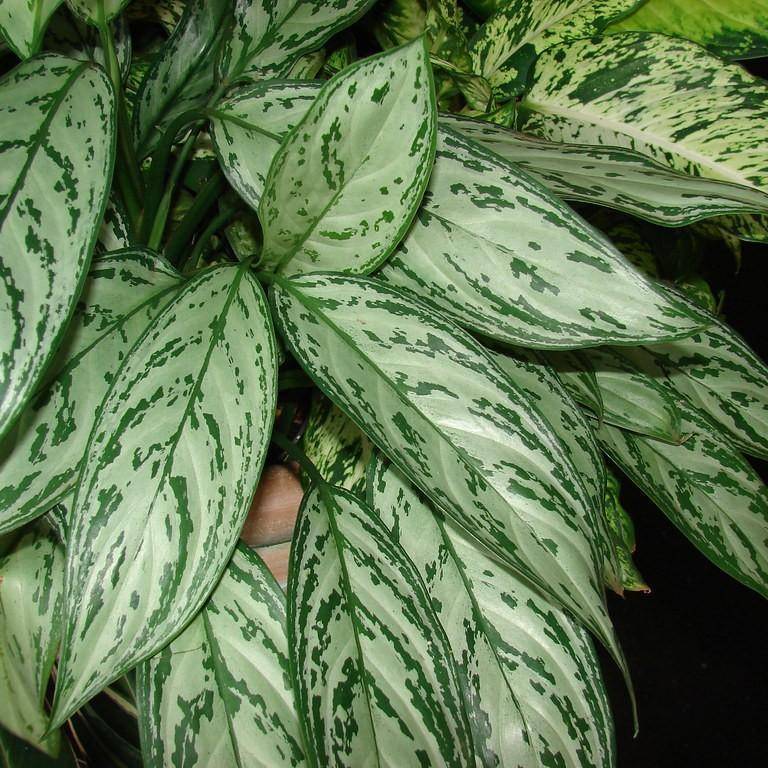
Chinese Evergreen: Care Guide, Varieties, and Growing Tips for Aglaonema
Learn how to care for Chinese evergreen (Aglaonema) houseplants, plus top varieties, troubleshooting tips, and pet safety details for this low-fuss indoor plant.
2026-07-04 · 14 min read
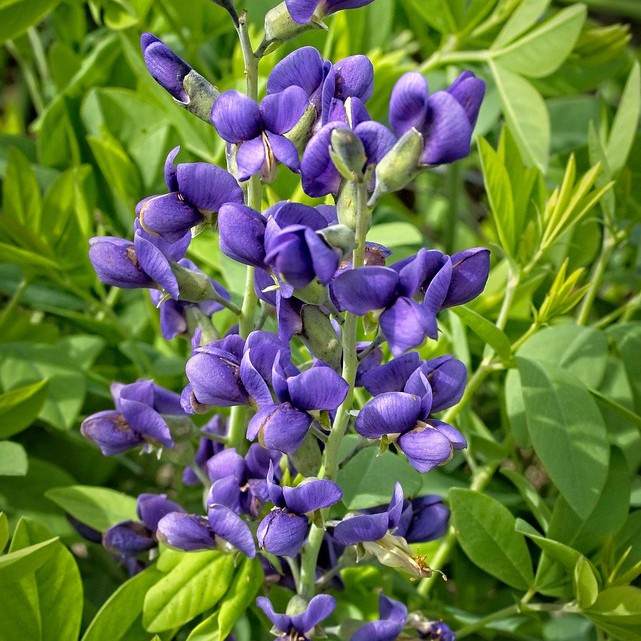
Caryopteris Clandonensis Heavenly Blue: Care, Size, and Growing Guide
Learn how to grow and care for Caryopteris Clandonensis Heavenly Blue, a pet-safe, flowering bluebeard shrub ideal for full-sun gardens.
2026-07-03 · 8 min read
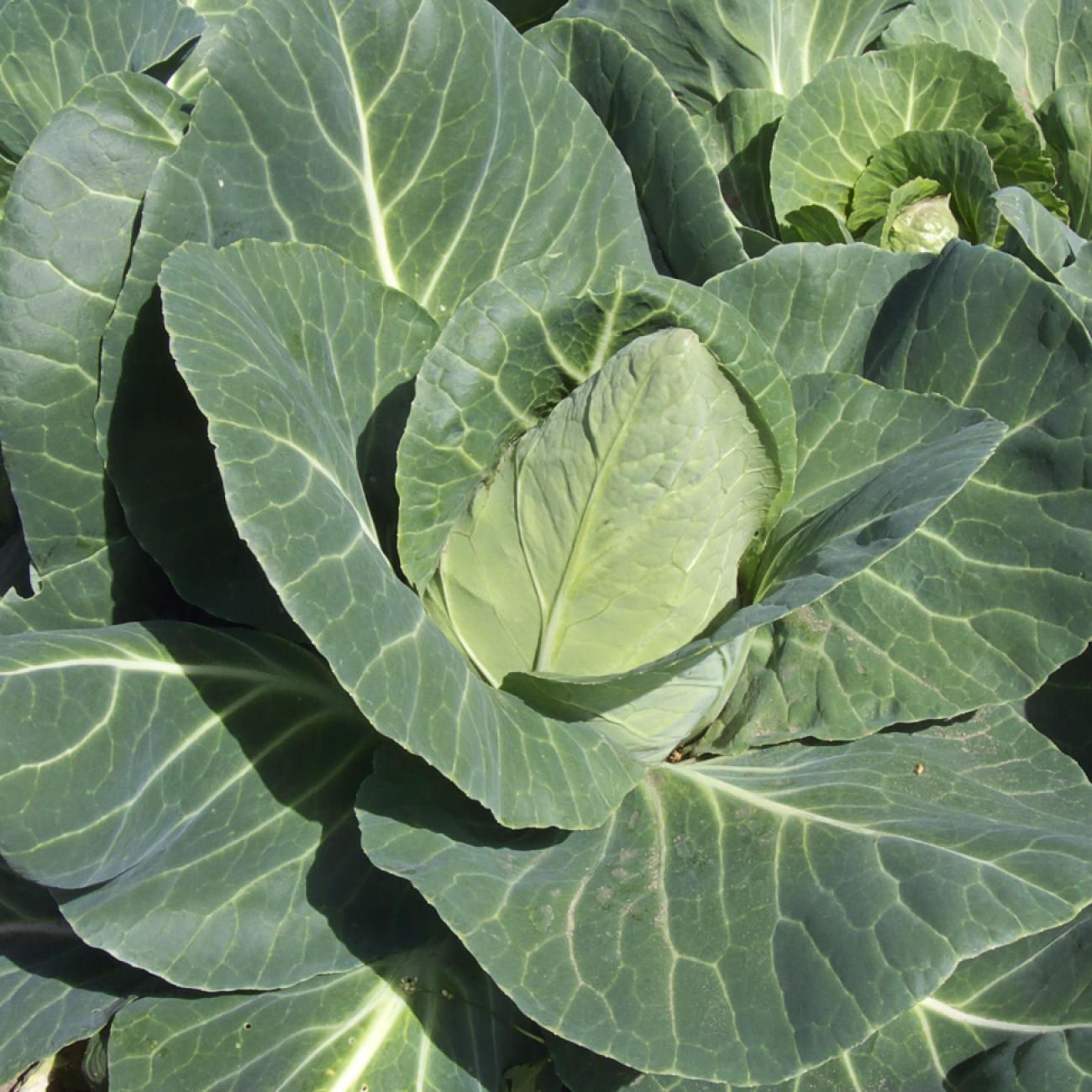
Cabbage: Types, Growing Guide, Benefits, and How to Use It
Learn all about cabbage, including common cultivars, how to grow it at home, nutritional benefits, and popular uses in cooking and landscaping.
2026-07-02 · 13 min read