Purple Leaf Plant Identification: A Simple Guide to Common Outdoor and Houseplant Varieties
Master purple leaf plant identification with this beginner-friendly breakdown of common trees, flowers, and houseplants, plus key traits to spot each species easily.
Purple Leaf Plant Identification: A Simple Guide to Common Outdoor and Houseplant Varieties
Deep violet, burgundy, and plum-toned foliage stands out sharply against typical green garden beds and houseplant shelves, but telling these vivid plants apart often trips up new gardeners. Many share similar rich purple hues, so casual observation alone rarely leads to a confident ID. This guide breaks down the most common purple leaf trees, flowering garden plants, and houseplants by easy-to-spot traits, so you can name any purple foliage plant you encounter with confidence.
Why Purple Leaf Plant Identification Gets Tricky (and How to Make It Easier)
Many purple leaf plants have similar deep burgundy or violet foliage, making them hard to tell apart at first glance. Start your identification process by noting core context clues: whether the plant is growing outdoors or indoors, its size (small shrub, large tree, compact houseplant), leaf shape, and growing conditions like sun exposure.
These context clues narrow down your options immediately: for example, a 6-foot potted plant with thick, fleshy leaves on a sunny windowsill is almost certainly a houseplant variety, not a 50-foot outdoor maple. For fast, accurate results, you can also snap a photo of the plant and upload it to Sproutly to confirm your ID and get tailored care tips.
Common Purple Leaf Trees to Identify
Purple leaf trees are popular ornamental additions to yards, and most thrive in full sun and humid conditions. Each species has distinct leaf traits to help with purple leaf plant identification:
- Purple-Leaf Japanese Maple (Acer palmatum 'Atropurpureum'): One of the most recognizable small purple leaf trees, with delicate, deeply lobed palmate leaves that hold a rich burgundy hue from spring through summer. It rarely grows over 25 feet tall, making it ideal for small yards.
- Bloodgood Japanese Maple (Acer palmatum 'Bloodgood'): Similar to the Purple-Leaf Japanese Maple, but its leaves are a deeper, more consistent purple that is less likely to fade to green in full sun. It also produces small red flowers in spring, a key identification marker.
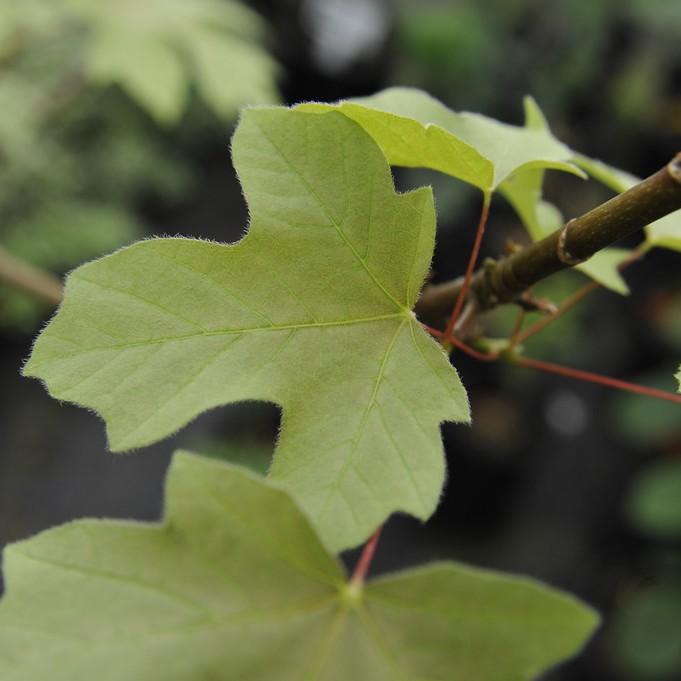
- Mocha Rose Big Leaf Maple (Acer macrophyllum 'Mocha Rose'): Has much larger, broader lobed leaves than Japanese maples, with a glossy purple-green tint that deepens in full sun. It is a larger tree, growing up to 50 feet tall, and is native to western North America.
- Autumn Fire Japanese Maple (Acer palmatum 'Autumn Fire'): Its purple foliage transitions to a bright fiery red in fall, which is its most distinct identification trait. It grows to a similar compact size as other small Japanese maples.
- Blue Spanish Fir (Abies pinsapo 'Glauca'): A coniferous tree with short, stiff, silvery-purple needles instead of broad leaves, making it easy to distinguish from deciduous purple leaf trees. It is native to southern Spain and grows in a pyramidal shape.
All these tree varieties are pet-safe, so you do not have to worry about toxicity for dogs or cats that wander through your yard.
Purple Leaf Flowering Plants for Gardens
Flowering purple leaf plants add both foliage and bloom interest to garden beds, and are often easy to spot when in bloom:
- Butterfly Bush (Buddleja davidii 'Pyrkeep' PURPLE EMPEROR): Has elongated, lance-shaped purple-tinged leaves and produces tall spikes of deep purple flowers that attract butterflies and pollinators all summer. It grows as a medium shrub, usually 4 to 6 feet tall, and is pet-safe.
Blooms are a helpful secondary ID trait for garden varieties, as they are unique to each species. If you spot a flowering purple leaf plant and are still unsure of its ID, use Sproutly to scan the blooms and leaves together for a more precise identification result.
Purple Leaf Houseplants to Spot
While most purple leaf plants are outdoor varieties, a small number make great low-maintenance houseplants:
- American Century Plant (Agave americana): A succulent with thick, fleshy purple-tinged leaves that have sharp spines along the edges and tip. It grows slowly, thrives in bright indirect light, and is pet-safe. It is called a century plant because it only blooms once every few decades, usually when it is 10 to 30 years old.
When identifying indoor purple foliage plants, always note how much light the plant receives, as many purple succulents develop deeper purple hues when exposed to more bright light. A light-starved American Century Plant, for example, may appear more green than purple, which can throw off casual ID attempts.
3 Key Traits to Speed Up Purple Leaf Plant Identification
You do not need a botany degree to nail accurate purple foliage ID. Focus on these three easy-to-spot traits to narrow down your options fast:
- Leaf shape: Broad lobed leaves point to maple varieties, while needle-like foliage means you are looking at a conifer like the Blue Spanish Fir. Succulents like the American Century Plant have thick, fleshy leaves.
- Growing location: Most purple leaf maples and firs only grow outdoors, while agave can grow both outdoors in warm climates and indoors as a houseplant. If you found the plant in a shaded living room, you can immediately rule out full-sun outdoor tree varieties.
- Seasonal changes: If the purple leaves turn bright red in fall, you are likely looking at an Autumn Fire Japanese Maple. If the foliage fades to green in partial shade, it is probably a Purple-Leaf Japanese Maple rather than a more sun-stable Bloodgood variety.
What to Do After You Identify Your Purple Leaf Plant
Once you have confirmed your ID, you can take simple steps to keep it healthy:
- For outdoor maple varieties, plant them in full sun and water regularly to support their humidity-loving growth habits. All the purple leaf tree varieties listed here are pet-safe, so you do not have to worry about them being toxic to dogs or cats that wander through your yard.
- For the American Century Plant, let the soil dry out completely between waterings to avoid root rot, and place it in a bright windowsill for best growth.
- For more tailored care schedules, look up your identified plant in Sproutly’s encyclopedia to get personalized watering, light, and fertilizing reminders based on your local climate.
Final Tips for Accurate Purple Leaf Plant Identification
If you are still stuck trying to name a purple foliage plant, try to take clear photos of multiple parts of the plant: the top and underside of the leaves, the stem, any flowers or fruit, and the full shape of the plant. This will help you get a more accurate ID if you use a plant identification tool like Sproutly, or if you ask for help at a local nursery.
You can also cross-reference your observations with the plant entries in Sproutly’s encyclopedia to match traits like growing zone, mature size, and bloom time to your plant.
Frequently Asked Questions
What is the most common purple leaf tree for home gardens?
The Purple-Leaf Japanese Maple is one of the most popular small purple leaf trees for home gardens, thanks to its compact size, consistent deep purple foliage, and low-maintenance care requirements.
Are purple leaf plants toxic to pets?
Many common purple leaf plants, including all the Japanese maple varieties, Mocha Rose Big Leaf Maple, Blue Spanish Fir, butterfly bush, and American Century Plant, are pet-safe. Always confirm your specific plant’s ID to check for toxicity risks.
How do I tell the difference between a Purple-Leaf Japanese Maple and a Bloodgood Japanese Maple?
Bloodgood Japanese Maple foliage is a deeper, more saturated purple that is less likely to fade to green in full sun, unlike the Purple-Leaf Japanese Maple. Bloodgood varieties also produce small red flowers in spring.
Is there a purple leaf succulent I can grow indoors?
Yes, the American Century Plant (Agave americana) is a low-maintenance succulent with purple-tinged leaves that grows well indoors in bright, indirect light. It is also pet-safe for households with dogs and cats.
Try Sproutly Today
Want to confirm the ID of a purple leaf plant you spotted, or get tailored care tips for your existing foliage? Head to Sproutly to scan your plant in seconds, access our full plant encyclopedia, and set up custom care reminders to keep your purple foliage thriving.
Gerelateerde lectuur
Meer gidsen die je misschien leuk vindt
Crocus Sativus: The Complete Guide to Growing, Identifying, and Using Saffron Crocus
Learn all about Crocus sativus, the plant that produces saffron, the world’s most expensive spice. Find care tips, identification guides, and safe growing practices.
2026-06-18 · 9 min read
Echium amoenum: Care, Identification, Uses, and Growing Guide for Red Feathers
Learn how to grow, identify, and care for Echium amoenum (Red Feathers), a drought-tolerant, pet-safe flowering herb ideal for full-sun outdoor gardens.
2026-06-18 · 10 min read
Canna Australia: Care Guide, Planting Tips, and Garden Uses for Australian Growers
Learn to grow, care for, and design with Canna 'Australia' — the bold, sun-loving foliage and orange flowering plant perfect for warm Australian gardens.
2026-06-17 · 20 min read