Identificación de hongos en árboles: Guía sencilla para jardineros domésticos
Aprende conceptos básicos seguros y sencillos de identificación de hongos en árboles para diferenciar los hongos beneficiosos de los crecimientos perjudiciales en los árboles de tu jardín.
Identificación de hongos en árboles: Guía sencilla para jardineros domésticos
Si has visto crecimientos extraños en forma de repisa o conjuntos de sombreros que brotan en los árboles de tu jardín, probablemente te hayas preguntado qué significan para la salud de tu planta. A diferencia de las guías de recolección silvestre que se centran en la comestibilidad, esta guía vincula la identificación de hongos en árboles directamente al cuidado de los árboles ornamentales más comunes, para que puedas diferenciar los hongos beneficiosos de los crecimientos que pueden indicar un problema en la salud de tu árbol.
Por qué es importante la identificación de hongos en árboles para los jardineros
Los hongos en árboles no son buenos o malos por naturaleza: algunos indican un ecosistema sano y próspero, mientras que otros señalan estrés subyacente o podredumbre en tu árbol. Identificar mal estos crecimientos puede generar consecuencias no deseadas para tu jardín.
Los hongos micorrícicos beneficiosos forman relaciones simbióticas con las raíces de los árboles, ayudando a la planta a absorber más agua y nutrientes del suelo. Eliminar estos hongos innecesariamente puede alterar el equilibrio natural de tu jardín y privar a tu árbol de estas ventajas. Por otro lado, ignorar los hongos que indican podredumbre interna puede exponer a tu árbol al riesgo de deterioro prematuro, o incluso a fallos estructurales si la podredumbre debilita ramas principales o el tronco. La identificación correcta te ayuda a tomar decisiones informadas sobre los pasos siguientes, en lugar de reaccionar por confusión.
Características clave que observar para identificar hongos en árboles
No se necesita equipo especializado para empezar a identificar hongos en tus árboles. Céntrate en estas cuatro características fáciles de detectar, y evita tocar hongos desconocidos para prevenir irritaciones cutáneas o la transferencia accidental de partículas tóxicas a alimentos o tu boca.
Forma y textura del sombrero
Los sombreros de los hongos pueden variar desde formaciones planas en forma de repisa hasta sombreros redondeados en forma de paraguas, o incluso crecimientos irregulares y abultados. Anota si la superficie es lisa, peluda, escamosa o viscosa, ya que son marcadores diferenciadores clave.
Estructura de laminillas o poros debajo del sombrero
Levanta con cuidado el borde de un sombrero (sin tocarlo directamente) para ver la estructura que tiene debajo. Algunos hongos tienen laminillas delgadas en forma de hoja, mientras que otros tienen poros diminutos, o ninguna estructura distinta en absoluto. Esta característica es una de las formas más fiables de diferenciar especies de aspecto similar.
Ubicación del crecimiento en el árbol
Anota si el hongo crece directamente del tronco, en las ramas principales, en el cuello de la raíz (la zona donde el tronco se une al suelo) o en el suelo que rodea las raíces del árbol. El crecimiento en la parte superior del tronco o en las ramas es más probable que indique podredumbre interna, mientras que el crecimiento en la base o en el suelo circundante puede ser una especie micorrícica inofensiva.
Patrón de crecimiento
Observa si los hongos crecen de forma individual, en racimos apretados o en filas superpuestas de formaciones en forma de repisa. Muchas especies causantes de podredumbre crecen en racimos apilados en forma de repisa, mientras que las variedades micorrícicas beneficiosas suelen crecer como sombreros individuales dispersos por la zona de raíces del árbol.
Hongos comunes que puedes encontrar en arces ornamentales
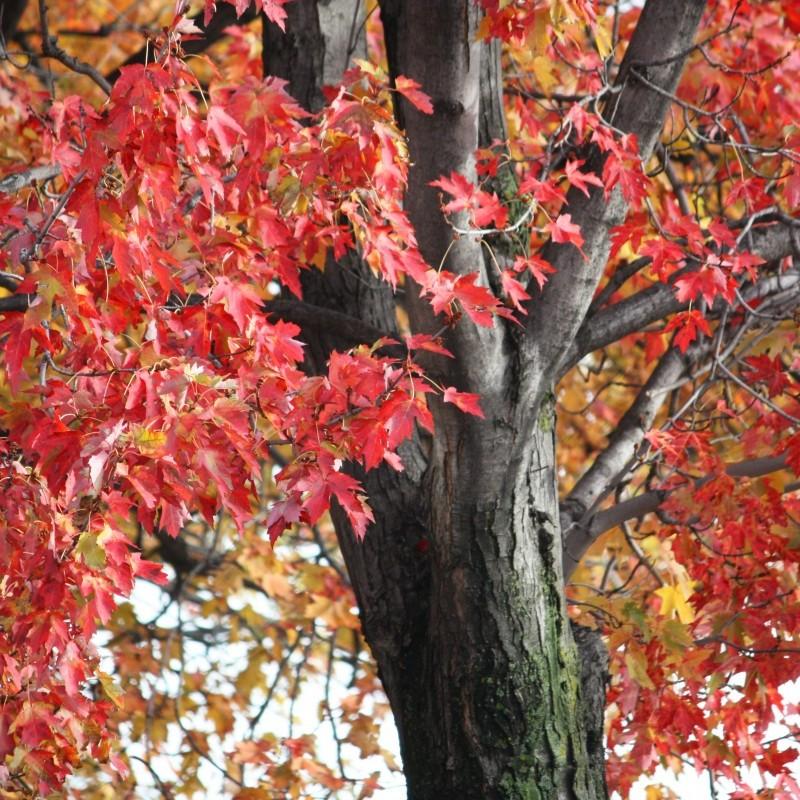
Los arces son algunas de las plantas ornamentales de jardín más populares, y su preferencia por condiciones húmedas hace que sean hospedadores frecuentes de crecimientos de hongos. Todas las variedades de arce, desde el compacto Arce de Amur hasta el colorido Arce japonés de corteza coral Beni Kawa, pueden desarrollar hongos en zonas sombreadas y húmedas de tu jardín. Aquí tienes algunas variedades comunes que puedes detectar:
- Hongos ostra: Estos hongos blandos en forma de abanico con laminillas debajo del sombrero suelen crecer en racimos sobre madera de arce muerta o moribunda. Aunque son señal de madera en descomposición, por lo general solo crecen en ramas ya muertas, no en tejido vivo sano. Si los ves en una rama muerta baja, podar el crecimiento afectado suele ser suficiente para resolver el problema.
- Concha de artista: Estos hongos duros en forma de repisa con parte inferior lisa y gris crecen directamente de los troncos de los arces. Indican podredumbre interna de la madera, por lo que su aparición en el tronco principal justifica una inspección más detallada del árbol en busca de otras señales de estrés.
- Pollo de bosque: Racimos en forma de repisa de color amarillo brillante o naranja que crecen tanto en madera de arce muerta como viva. Aunque es una especie comestible muy conocida, nunca consumas ningún hongo silvestre sin la verificación de un experto, ya que tiene parecidos tóxicos.
- Agaricos micorrícicos: Pequeños sombreros marrones o canela en forma de paraguas que crecen en el suelo alrededor de la base de los arces, incluyendo el Arce japonés Aka Shigitatsu Sawa de hojas caladas. Casi siempre son beneficiosos, ya que forman relaciones simbióticas con las raíces del árbol para mejorar la absorción de nutrientes.
Prácticas seguras para identificar hongos en árboles
Ninguna identificación visual es 100% fiable para determinar la comestibilidad, así que nunca consumas hongos silvestres que encuentres en tus árboles, incluso si se parecen a una especie comestible familiar. Existen parecidos tóxicos para casi todos los hongos comestibles populares, y una identificación errónea puede causar enfermedades graves.
Para una identificación preliminar y orientación sobre los pasos siguientes, usa herramientas como la aplicación Sproutly. Haz fotos claras del hongo desde varios ángulos (superior, inferior y lateral), además de fotos del árbol circundante y su follaje, para obtener una evaluación rápida y fiable de lo que tienes entre manos. La enciclopedia de plantas de Sproutly incluye fichas de todas las variedades de arce comunes y los hongos asociados, para que puedas comparar el tipo de hongo con las necesidades de cuidado específicas de tu árbol.
Si te preocupa la comestibilidad o un posible daño al árbol, acude siempre a un experto certificado local, ya sea un identificador de hongos de una sociedad micológica local o un arborista certificado.
Qué hacer si identificas un hongo perjudicial en el árbol
Si tu evaluación apunta a un hongo causante de podredumbre, sigue estos pasos para proteger tu árbol y tu jardín:
- Inspecciona todo el árbol en busca de señales visibles de daño: Busca grietas en el tronco, corteza pelada, follaje marchito o descolorido, o zonas huecas en las ramas principales. Estas señales te ayudarán a calcular la extensión de la podredumbre, si la hay.
- No intentes eliminar el hongo tú mismo: Arrancar o raspar los sombreros visibles del hongo no soluciona el crecimiento de hongos subyacente dentro del árbol o el suelo, y puede extender las esporas de hongos a otras zonas de tu jardín.
- Consulta a un arborista certificado si sospechas de podredumbre estructural: Un arborista puede realizar una prueba de resistencia para comprobar el alcance de la podredumbre interna, y aconsejarte sobre si el árbol se puede tratar, o si su eliminación es necesaria para evitar riesgos de seguridad.
- Mantén a las mascotas alejadas de crecimientos desconocidos: Aunque los arces en sí son seguros para las mascotas, algunos hongos de árbol pueden ser tóxicos si se ingieren. Restringe el acceso a la zona hasta que hayas confirmado la identidad del hongo.
Cómo disuadir el crecimiento no deseado de hongos en árboles
Los hongos prosperan en condiciones húmedas y sombreadas, por lo que ajustar tu rutina de cuidado para reducir el exceso de humedad puede ayudar a prevenir crecimientos de hongos no deseados:
- Mejora el drenaje alrededor de las raíces del árbol: Si el agua se acumula alrededor de la base de tu árbol después de llover, agrega una capa de suelo con buen drenaje o crea una pendiente suave para dirigir el agua lejos del cuello de la raíz. Evita amontonar mantillo directamente contra el tronco, ya que atrapa la humedad contra la corteza y crea un entorno perfecto para que las esporas de hongos se establezcan.
- Poda las ramas muertas con regularidad: La madera muerta es un punto de entrada principal para los hongos causantes de podredumbre. Poda las ramas muertas o dañadas al menos una vez al año, haciendo cortes limpios cerca del tronco para favorecer una curación rápida.
- Evita regar en exceso la base de los árboles: La mayoría de los árboles ornamentales maduros solo necesitan riego suplementario durante periodos prolongados de sequía. Si tienes una variedad de arce de sombra parcial, ten en cuenta que la menor exposición al sol mantiene el suelo húmedo durante más tiempo, por lo que puedes regar estos árboles con menos frecuencia que las variedades de sol pleno.
Notas finales sobre la identificación responsable de hongos en árboles
La mayoría de los hongos en árboles no son motivo de preocupación inmediata. Muchos son o bien beneficiosos para la salud de tu árbol, o solo crecen en madera ya muerta que no supone ningún riesgo para el resto de la planta. Dedicar tiempo a identificar correctamente los crecimientos en tus árboles te ayuda a evitar intervenciones innecesarias y a detectar posibles problemas a tiempo antes de que se agraven.
Si nunca estás seguro de lo que estás viendo, la herramienta de identificación de plantas de Sproutly te puede ayudar a identificar tanto la especie de tu árbol como cualquier hongo asociado que crezca en él o alrededor, para que puedas simplificar tu rutina de cuidado del jardín y tomar decisiones informadas sobre tu paisaje.
Preguntas frecuentes
¿Puede la identificación de hongos en árboles decirme si mi árbol se está muriendo?
Algunos hongos en árboles indican podredumbre interna, pero no todos los crecimientos son perjudiciales. Si identificas hongos que crecen directamente del tronco o de las ramas principales de tu árbol, es una buena idea que un arborista inspeccione el árbol en busca de daños estructurales.
¿Son tóxicos los hongos que crecen en mi arce japonés para las mascotas?
Depende de la especie de hongo. Aunque los arces japoneses en sí son seguros para las mascotas, algunos hongos de árbol pueden ser tóxicos si se ingieren. Mantén a las mascotas alejadas de crecimientos desconocidos, y usa una herramienta de identificación fiable para confirmar el tipo de hongo si tienes dudas.
¿Eliminar los hongos de mi árbol evitará que vuelvan a crecer?
Los hongos son los cuerpos fructíferos visibles de los hongos que viven dentro del árbol o el suelo circundante. Eliminar solo los hongos visibles no detendrá el rebrote; tendrás que solucionar el problema subyacente de humedad o podredumbre para disuadir el crecimiento futuro.
¿Puedo usar una aplicación de identificación de plantas para identificar hongos en árboles?
Sí, herramientas como Sproutly te pueden ayudar a obtener una identificación preliminar de los hongos en árboles a partir de fotos claras. Para confirmar la comestibilidad o si tienes preocupaciones sobre la salud del árbol, acude siempre a un experto local certificado.
¿Listo para identificar los hongos que crecen en los árboles de tu jardín? Prueba Sproutly hoy mismo para obtener resultados rápidos y precisos adaptados a las necesidades de cuidado específicas de tu jardín.
Lecturas relacionadas
Más guías que podrían interesarte
Wild Flower Names: 8 Common, Distinct Species to Identify and Grow
Learn common wild flower names, key identifying traits, and growing tips for popular native and ornamental species perfect for pollinator gardens and low-maintenance landscapes.
2026-06-24 · 10 min read
Watermelon: Complete Growing, Nutrition, and Usage Guide
Learn how to grow watermelon, plus its nutrition, health benefits, varieties, and potential side effects in this comprehensive, beginner-friendly guide.
2026-06-23 · 12 min read
8 Unique Plant Species to Grow in Full-Sun Outdoor Spaces (All Pet-Safe)
Explore low-fuss, pet-safe plant species for full-sun outdoor gardens, from trailing groundcovers to flowering shrubs that thrive with minimal upkeep.
2026-06-23 · 8 min read